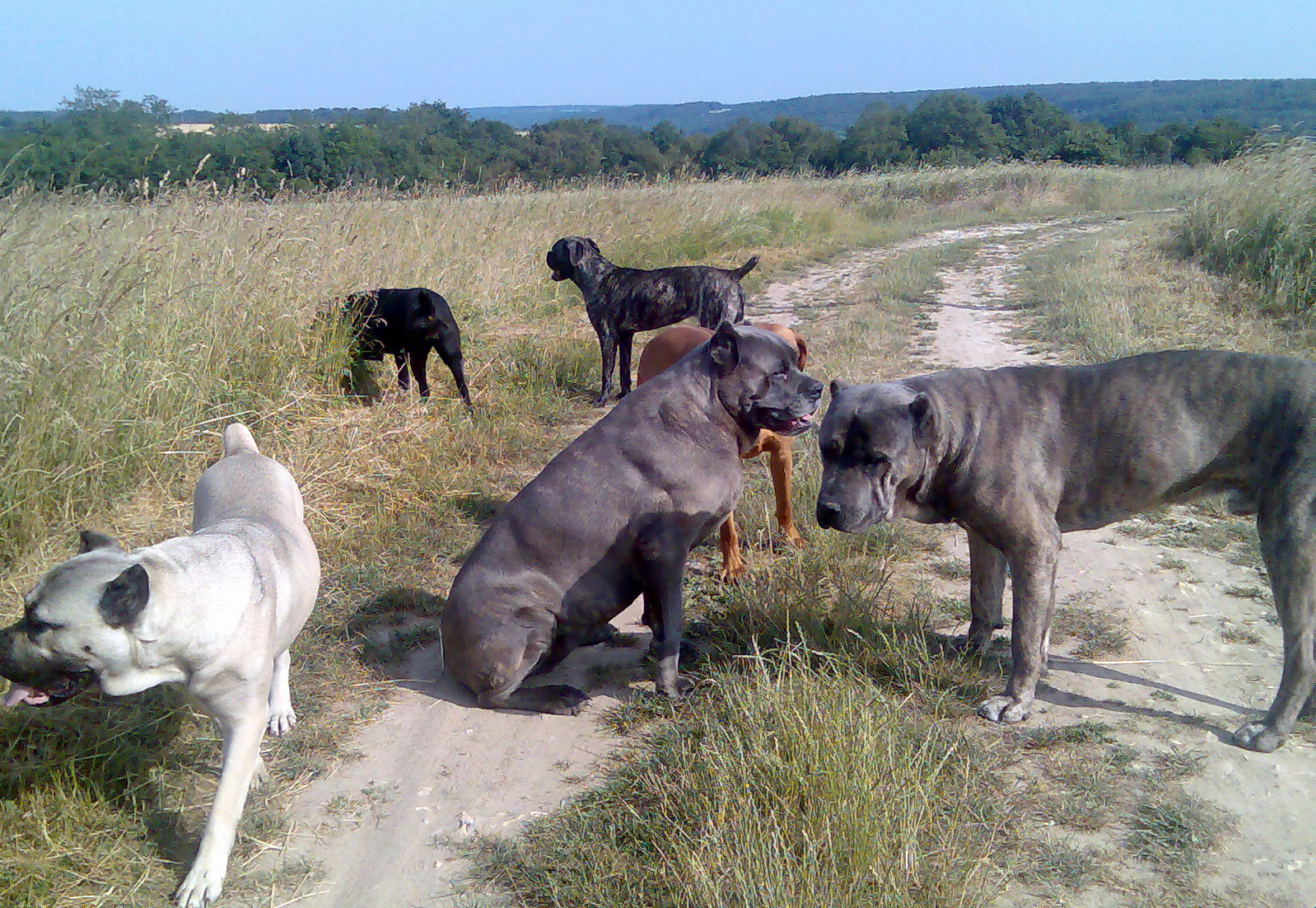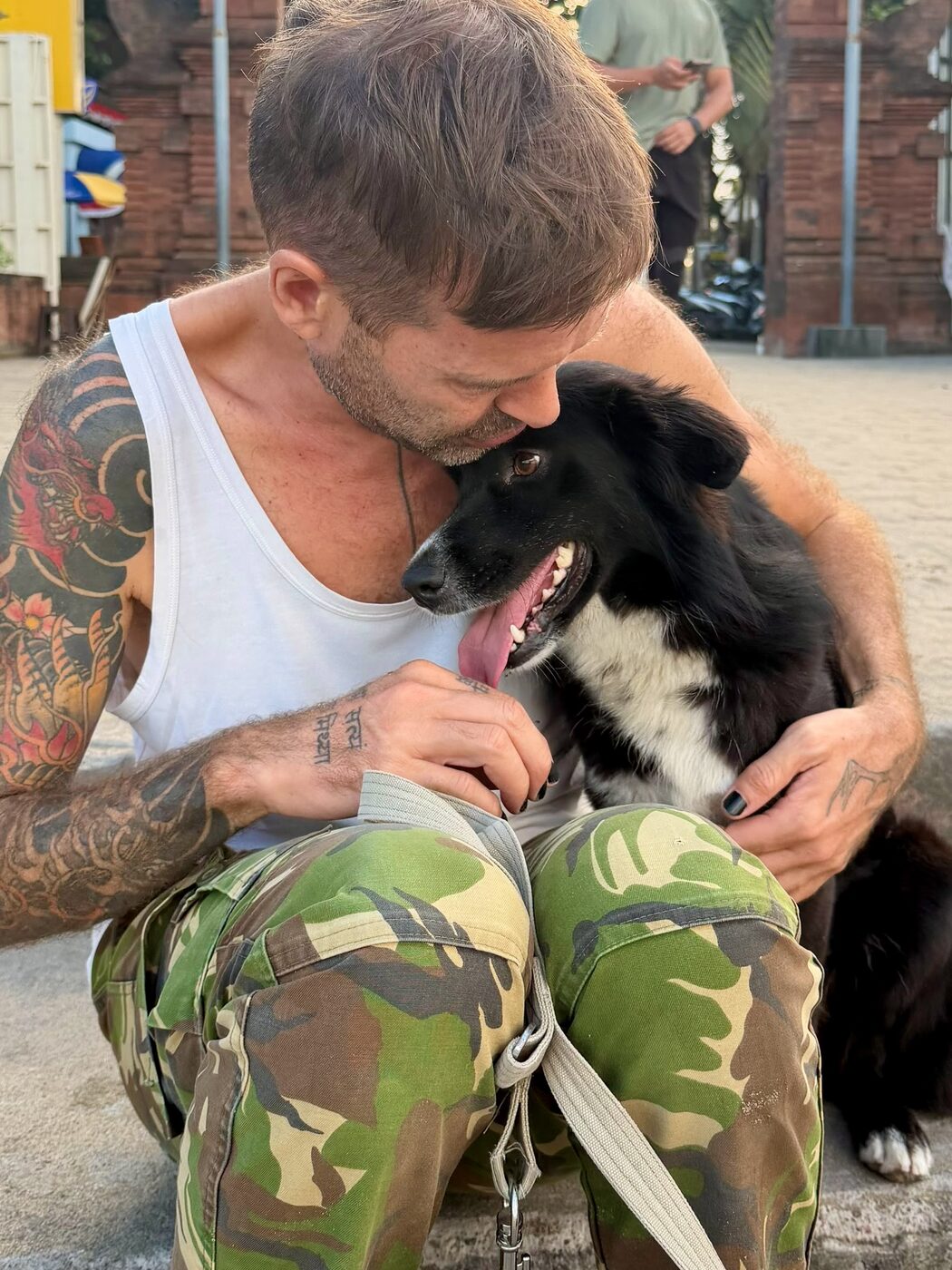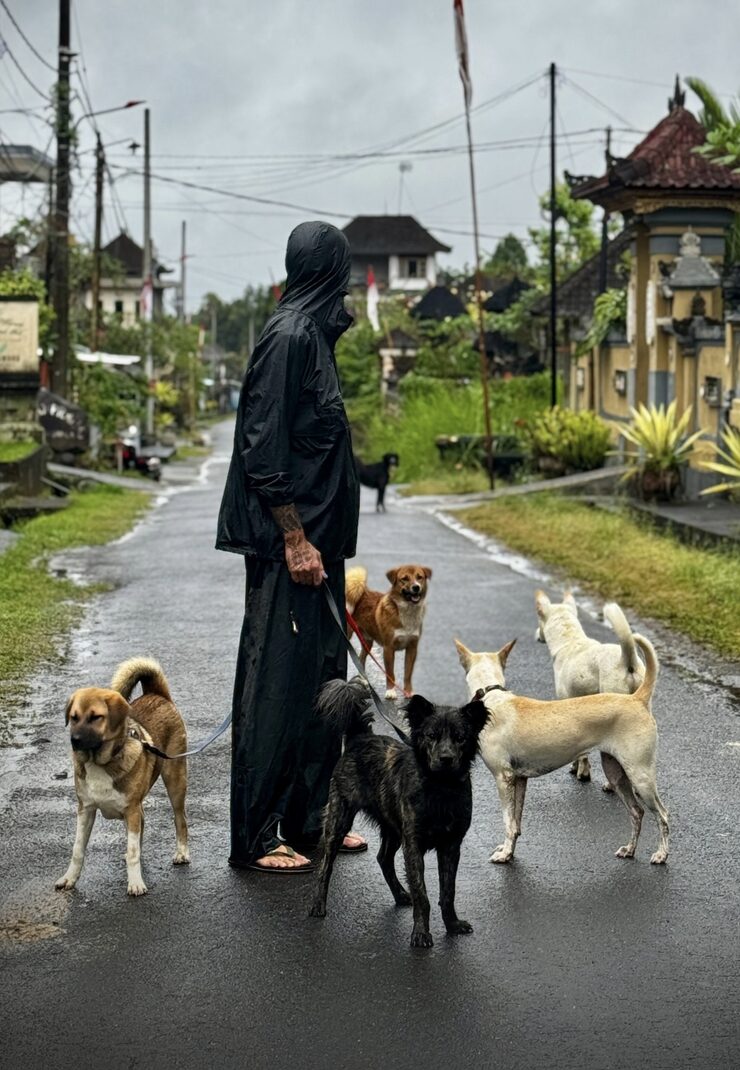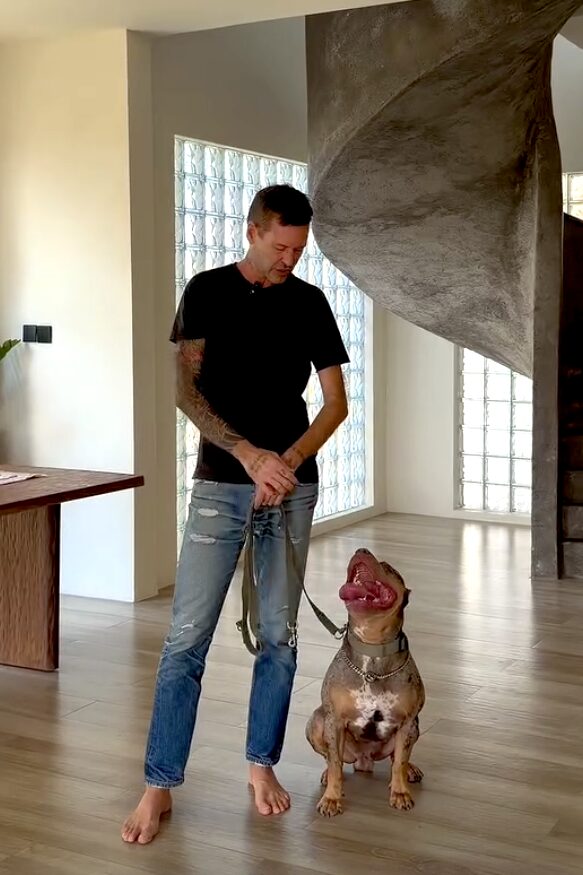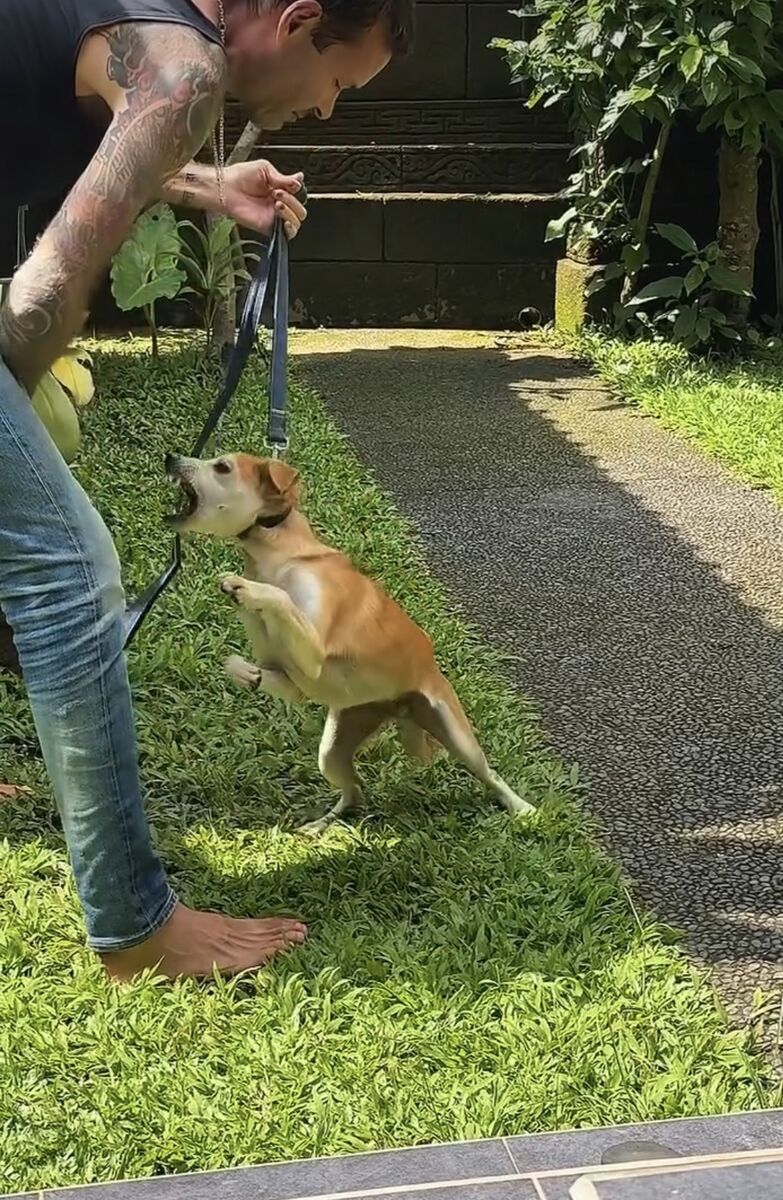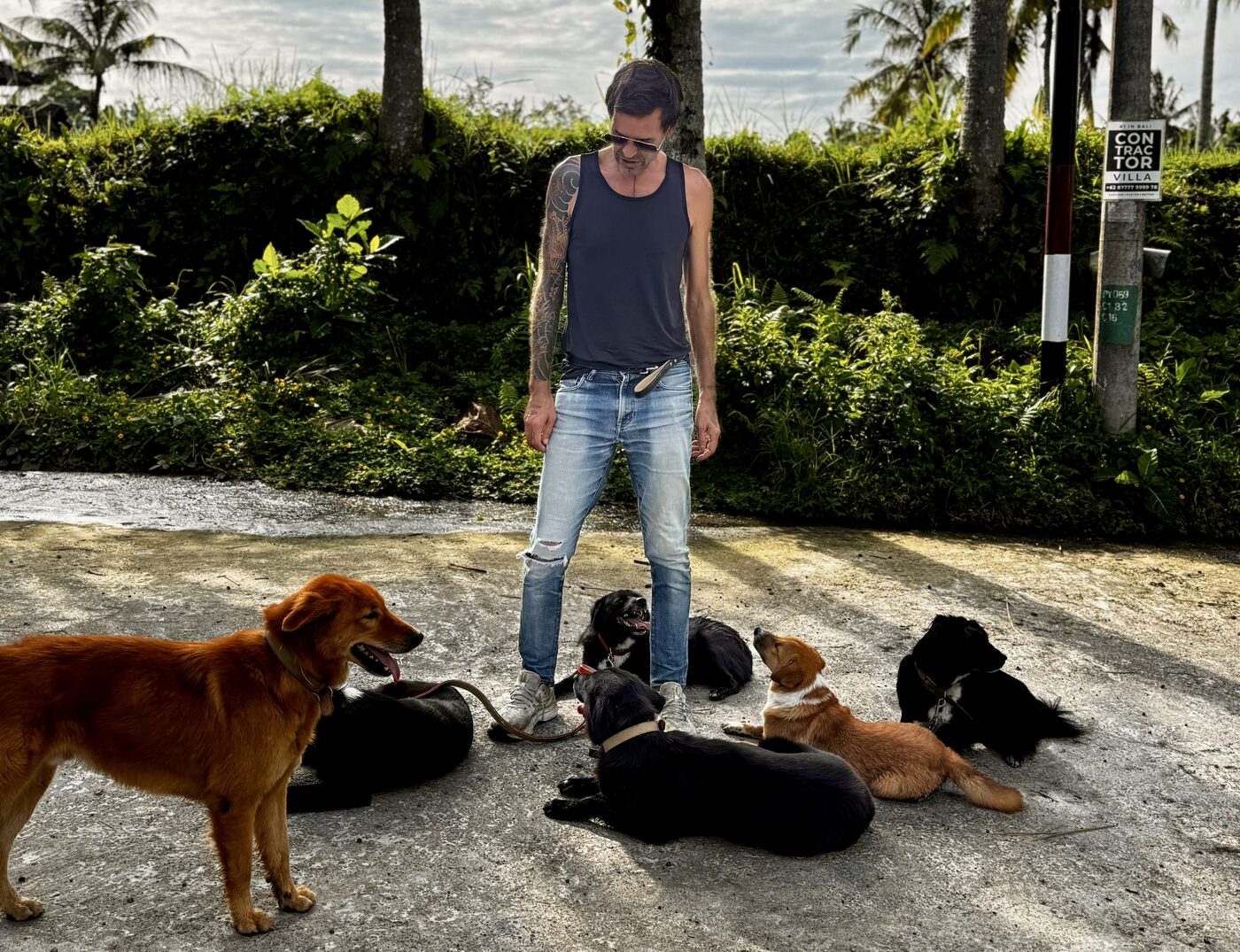

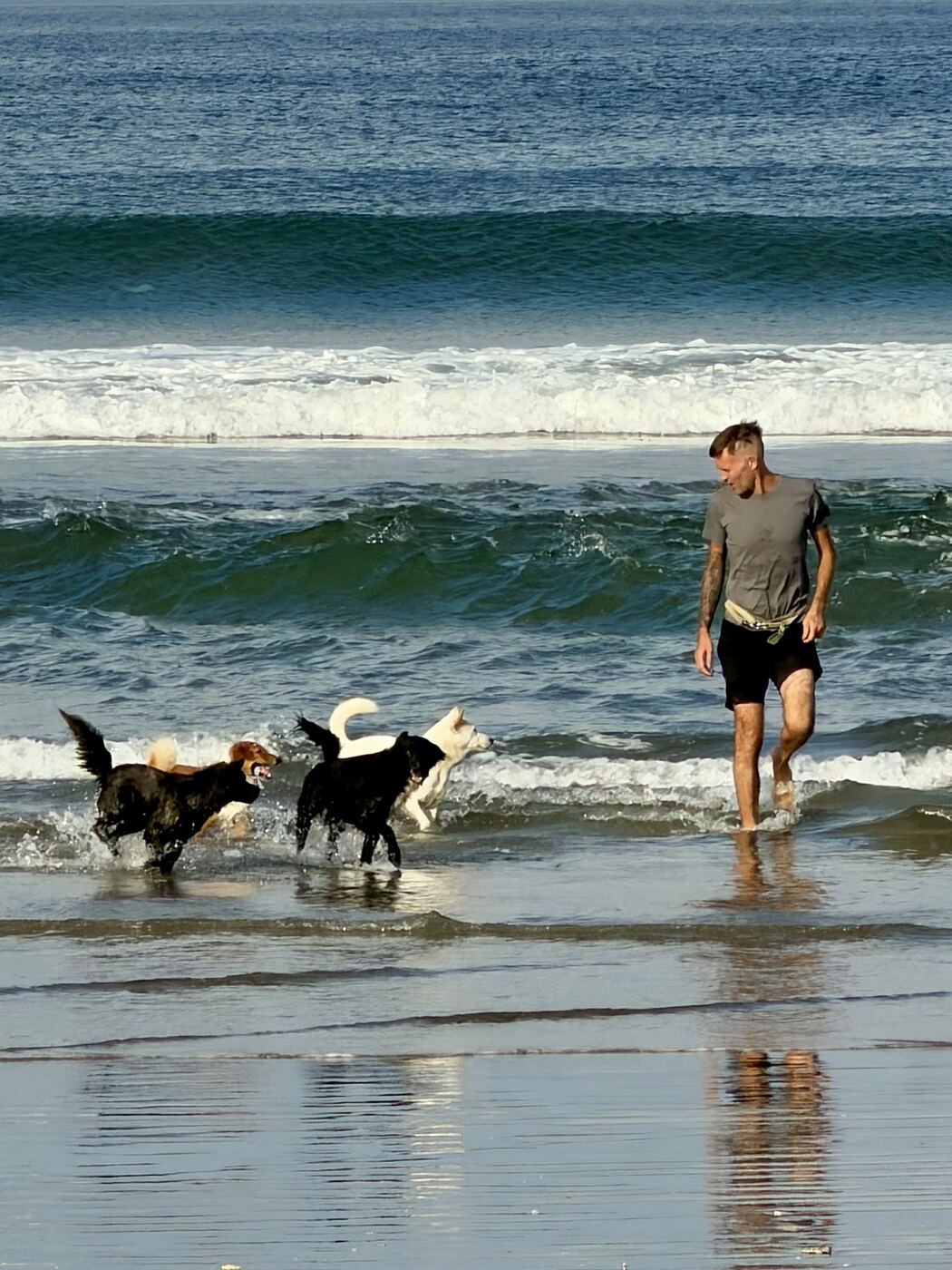
A perfectly obedient dog, in every circumstance of daily life — in 3 weeks.
No treats. No gimmicks. Just 30 years of studying how dogs actually behave — turned into online video courses you can apply at home. This is The Stephan Mairesse Method, rooted in canine ethology and proven on camera: real dog behavior, filmed firsthand, not just explained in theory.
Learn at your own pace, anywhere in the world: online lessons mean location is no longer a barrier, and I currently coach owners worldwide. That reach builds on years of in-person work across fifteen countries, which is where this method was tested and refined.
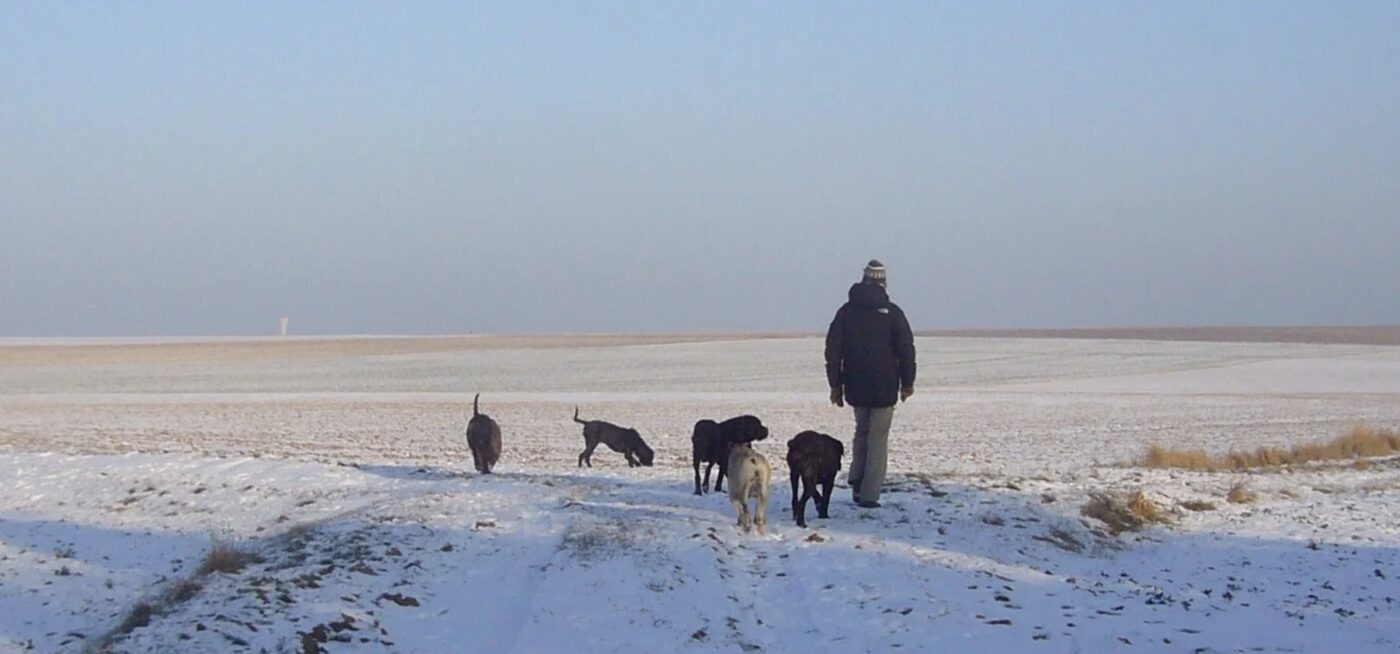
This is the level of obedience my method gets you to.


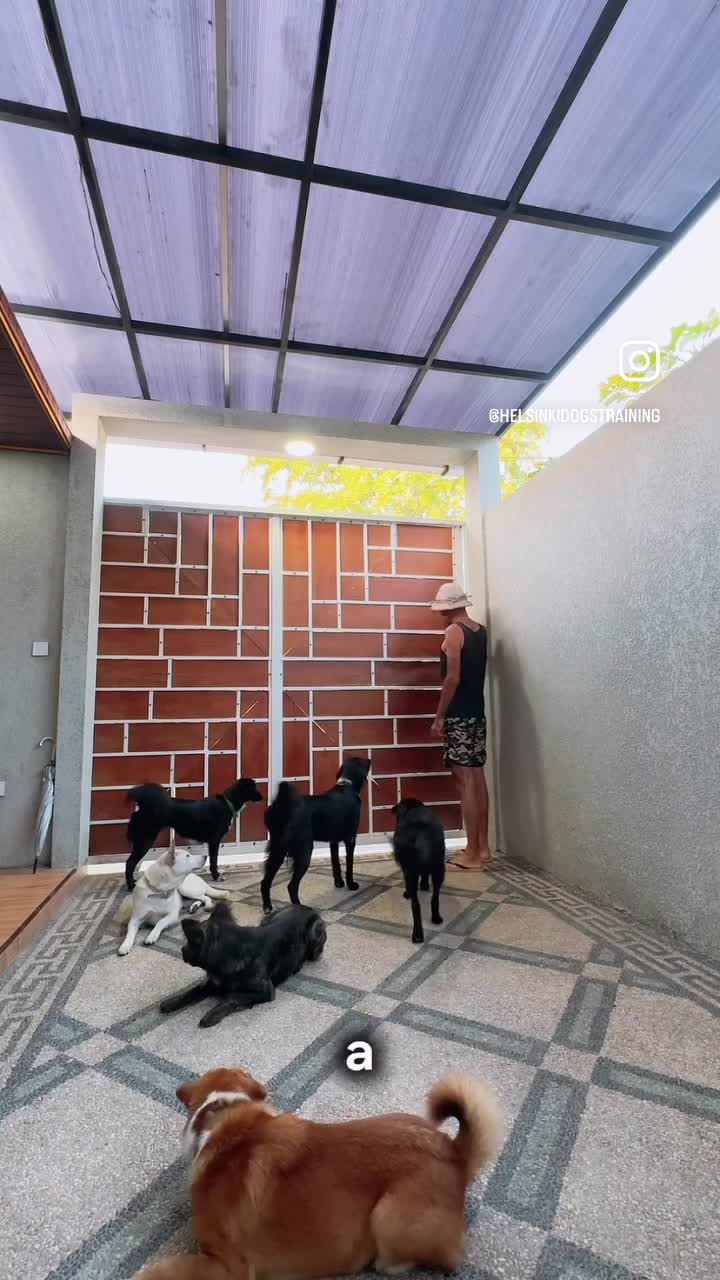
Since I've been giving lessons, every client who applies my method correctly has achieved this.
Who this is for.
For whom?
No tricks taught. This is for people who want genuinely effective obedience in every circumstance of daily life, and a perfectly balanced dog — free of behavioral problems — with whom to build a harmonious relationship.
For which dogs?
For all dogs, of any breed or no breed at all. From two months old, or from the day he arrives home — with no upper age limit.
The goal?
To bring your dog everywhere with you and have perfect control over him. No more headaches wondering whether he'll behave with your guests, at the restaurant, whether he'll come back to you off-leash, whether he'll drag you around on leash, or in an emergency.
But not only obedience: a balanced dog, and a healthy, harmonious relationship with him.
How?
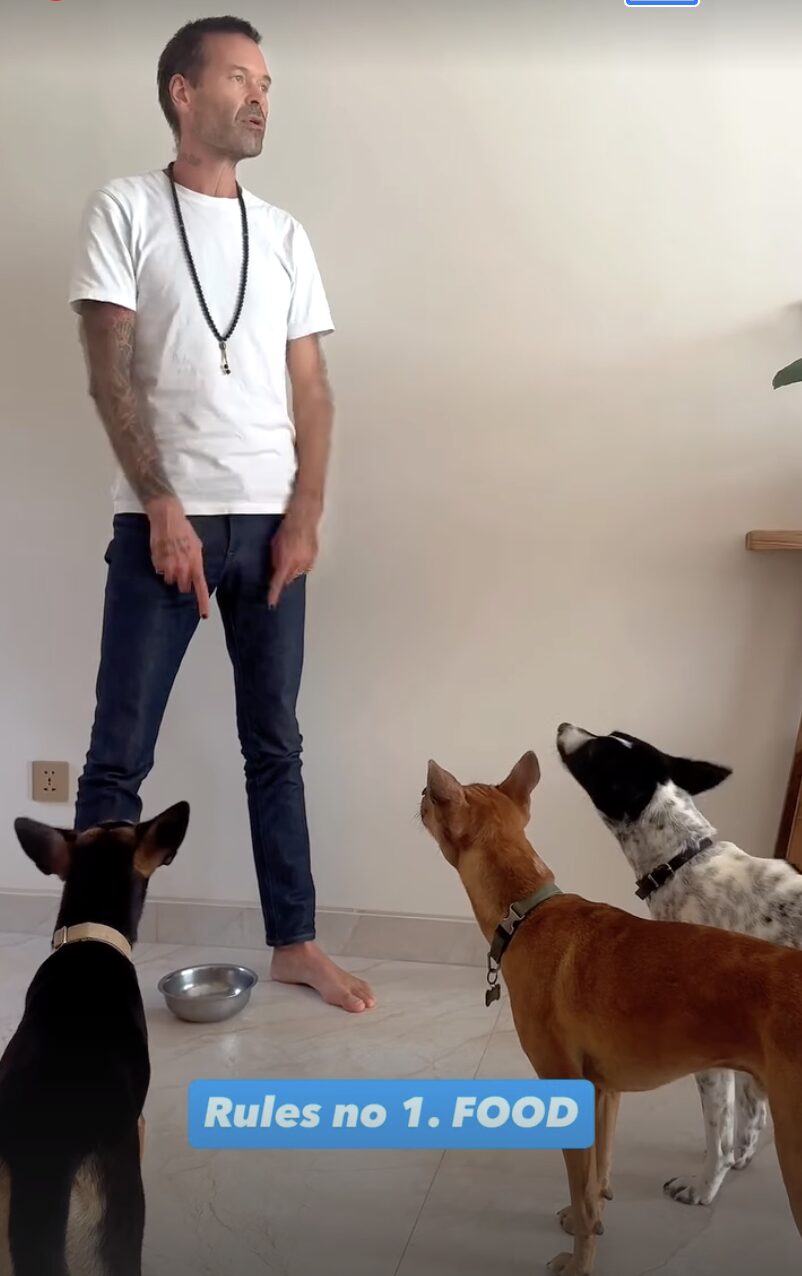
By learning my method through videos that show you, step by step, how to teach your dog every command. You follow the training of several dogs who had never been trained before, until they obey perfectly. Every step is explained in detail in the videos, and in the 70-page manual that comes with them.
What is exactly taught, and what results can you get?
Videos also show dogs interacting live — the "arrival ritual" a dominant dog uses to hold a newcomer back until the inspection is over, mealtime rank order, why a dominant can take a subordinate's food, and more. Nothing here is invented: it's what Stephan has observed and filmed himself, over years spent living with dog packs, not theory borrowed from a book.
Results come fast — here's the proof.
"I practically have a new dog!!!"
"Going to a restaurant used to feel impossible — she used to bark, pull the leash, restless and anxious. Since we started training, she's become so much calmer, and honestly just a happier little soul."
"Thank you again for today, the amount of calm that has taken over my house and my pack is literally incredible — and that calm is also very much in me 🙏"
"Hi Risa, hi Stephan, I am so so happy with our work. The improvement is already so big in terms of behaviour that I can hardly believe it. Looking forward to everything that will come."
"We had a session at home this morning and this fella is behaving SO GOOD since."
"You're a game changer. I'll never thank you enough for what you taught me and the relationship I have with my dog."
Messages from owners, sent within 24 hours of applying my method — see them for yourself in the "Feedback" highlights on Instagram.
Here's the before/after of the dogs featured in the course videos you'll get.
These dogs had never been trained before.
The videos you'll get are in full HD.


Watch, learn, apply — on your schedule.
Why does your dog obey you? Because you know how to make yourself obeyed. That might sound simplistic, but it means your dog doesn't become obedient because he has passed through a dog trainer's hands.
Read more
He becomes obedient because the trainer has taught you how to make yourself obeyed. He's taught you a method of obedience.
When I give lessons to owners in person — what I've been teaching for 30 years — I explain and show them how to make their dog obey, and they then apply what I've taught them so that they, in turn, can make themselves obeyed.
It's exactly the same principle with these online courses. I teach you my method — explaining and showing you, step by step, in the smallest detail, how to make yourself obeyed, filmed with several dogs who had never been trained before.
My first dog-training DVD, made in 2005, and the COVID period proved to me that it was entirely possible to teach dog training remotely.
Alongside the videos, you also get my 70-page companion manual — the same material I hand to private clients, covering the thinking behind the method as well as the steps.
First lesson: how your dog works, the nature of his behavior, and what rules of life to put in place at home for his wellbeing and balance — this is also the groundwork for real, everyday obedience.
Learning how to give a command — do's and don'ts. How to teach position (sit, down, mat), how to teach heel and the recall. Apply in a calm environment.
Once your dog obeys you in a calm environment, you'll learn to get the same obedience in your daily life — on the street, out on a walk with other dogs around, at the café, at the office…
How can I get a fully obedient dog in only 3 weeks?
Because when I give lessons in person for complete obedience — training a dog completely from scratch — it takes three weeks maximum. I start with a first lesson at home, explaining to the owner how to communicate with their dog and what rules to apply at home for his balance, then I give 6 obedience lessons, at a rate of 2 or 3 lessons a week.
A dog's level of obedience doesn't come from repeating exercises over and over — it comes from applying the method correctly. The more precisely you apply it, the better the result. Every client who has applied what I teach correctly has ended up with a perfectly obedient dog within 3 weeks.
If people don't apply what I teach correctly, I could give them 300 lessons and they still wouldn't get any results.
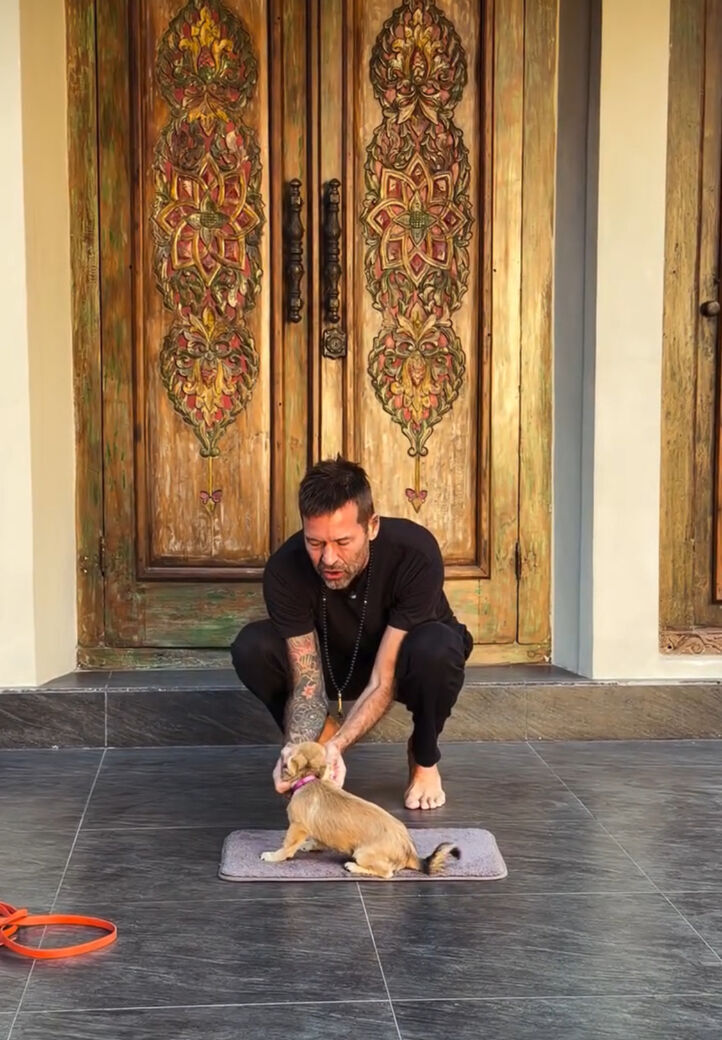

What is my training method?
Training method = leadership + positive reinforcement + discomfort.
Leadership is the foundation of obedience — without it, there's no logical reason at all for your dog to obey you.
Read more
I didn't arrive at this formula from a textbook. It comes from my years of observing dogs: when you watch them sort themselves out with each other, long enough and closely enough, two of these three ingredients keep showing up on their own — leadership, and discomfort. Positive reinforcement is the exception: it's not something dogs do with each other, so that part comes specifically from the human-dog relationship. Here's what each one actually means, and why none of them works alone.
If he doesn't perceive you as the one who decides, why would he listen to you? He could obey you for two other reasons, but neither is effective nor respectful. The first is a treat — but its effectiveness is very limited in everyday life, nor does it solve any behavioral troubles (read the full explanation in the article below). The second is pain (prong collars, shock collars…) — I completely reject the use of that in training. I've trained explosive-detection dogs for elite police units and worked with category 1 and 2 "dangerous" dogs under French law — reliability in those settings isn't optional, and it's never come from fear.
Leadership doesn't just make your dog obey you consistently: it's the only foundation that's both effective and respectful of your dog's nature, which is necessary for his balance. You can get a dog to obey without being dominant over him — but it won't hold up, and it won't be good for his wellbeing, because it won't be coherent. Looked at through the lens of a dog's education as a coherent whole, dominance and obedience are, in practice, almost synonymous: two sides of the same coin. A dog is meant to submit to a dominant's demands — but not to a subordinate's. That's not a theory — watch any pack of dogs that have nothing to prove to anyone, and you'll see it for yourself.
When you dominate your dog — when you address him to get him to obey — he'll look at you to find out what you expect of him; in other words, you have his attention. Otherwise, he'll keep focusing on whatever interests him and ignore you.
Positive reinforcement: the moment a dog obeys me, he's warmly praised and generously petted. For obedience, we always use a soft, warm, encouraging voice. That is positive reinforcement — and I use it every single time. I'm not against it; I've used it for thirty years. What I'm against is the trend of treating it as the only tool that should exist.
To understand more precisely what's really happening in my method, the petting and praise aren't just a simple association of "I obey = I get petted." Treating petting as positive reinforcement assumes petting is always pleasant for a dog — which isn't true: some dogs don't particularly enjoy it, and many sometimes refuse it outright. But when you dominate your dog, your petting inevitably takes on a very particular flavor: a mark of attention from the boss, which is deeply rewarding. A dog never appreciates petting as much as when it comes from a dominant — he then receives it very calmly, often half-closing his eyes.
Your petting only takes on its full meaning, and reaches its purpose, if you're perceived as the leader — only then does it really become "positive reinforcement." Otherwise, your dog might not even pay attention to it.
Discomfort. Discomfort is not pain, and I want to stress that point. Yes, you do need to introduce something unpleasant when a dog disobeys if you want real, effective obedience. Without discomfort, it's impossible to get obedience in every circumstance — and real obedience isn't a luxury. In the work I've done — bite-prevention programs in schools, zootherapy with inmates, dogs that have to hold a recall around traffic or around other dogs — it's often what keeps a dog, or the people around him, safe.
So what degree of discomfort? That's directly tied to your level of leadership. If you clearly and unambiguously dominate your dog, the level of discomfort needed is slight. If you don't dominate your dog, or only partly, that level has to be higher.
When you dominate your dog unambiguously, it isn't really the discomfort itself — the unpleasant physical sensation — that stops him from disobeying. Producing that discomfort is a reminder to your dog: "Remember, I'm the one who decides."
If some dogs appear to obey very well even though they hold all the power at home, it's because they have a very weak temperament. So why would you even need to dominate that type of dog? Because it's fundamental to their balance.
The more temperament a dog has, the more directly leadership affects his level of obedience — and across fifteen countries and every kind of dog, from family pets to working and street dogs, that's the one pattern that's never once failed to hold.
Obedience is taught without treats — why?
A treat only works when nothing more interesting has your dog's attention. The use of treats is fundamentally inefficient for two reasons.
Read more
First, when a dog is interested in something more attractive than the food offered to him, he won't listen. If he's about to cross a road to reach a dog he's just spotted and the treat doesn't attract him enough to turn around, I'll let you imagine the result.
The second reason is behavioral. To be obeyed, you need to be perceived as the one who decides. In a pack, only a dominant animal can approach a subordinate and take its food — so by letting your dog take a treat from your hand, you're actually adopting the submissive position.
The beige female is dominant over the black dog: she chases the black dog away whenever it tries to approach her food — and, as the dominant, she can just as easily walk over and take the black dog's food herself. What does that tell you about treats?
In recent years, some self-styled experts have claimed dogs no longer function within a strict hierarchy — and even less so with humans, because we're a different species. But the experts who spent decades studying dogs and concluded there IS a hierarchy weren't wrong the whole time — were they simply blind for decades? But how many of them have actually observed a pack? In the end, this is my opinion, and it's built on what I've seen — which is exactly what I show you, through the videos, rather than just argue in words.
I didn't take any of this on faith: I spent six years living with my own ten dogs, plus another ten boarders — none in outdoor kennels, all in my own house — watching their social organization closely enough to see what actually held up.
For anyone who doubts dogs have a hierarchical social system, I don't ask you to take my word for it — the footage below that I've filmed myself that shows it clearly. Nothing here is invented: it's what I've seen, filmed, and put in front of you. And why does a dog keep a hierarchical relationship even with humans, knowing full well that we are not dogs? Because during the social imprinting period — from 3 to 12 weeks old — he lived alongside us.
Real footage, filmed at home: the dominant dog holds the food bowl while the subordinate keeps his distance. A dominant can prevent a subordinate from getting close to the food — and can come take a subordinate's food outright, forcing him to walk away.
We've all heard of a dog on the sofa who threatens to bite anyone trying to move him. Or a dog who growls or bites to defend his food. Or a dog who won't let a husband near his wife. These are all everyday examples of hierarchy at work.
Leading a dog is what puts him at ease — it doesn't stop you from giving him affection. You can still pet him and play with him all day long.
To love a dog is to take him for what he is, not for what we'd like him to be — to respect his fundamental needs and his deep nature, and offer him a structured living environment that respects his social codes.
There are training methods far more effective, and far more respectful of a dog's essence, than those using treats. It's high time to look into them, for a genuinely harmonious life with this wonderful animal.
To be clear: I do use positive reinforcement — just not through treats, and not on its own (see "What is my training method?" above).
Read more in Dogs and the hierarchy.
What 30 years in the field taught me about hierarchy.
During my studies in ethology and canine behavior, I read a great many books and academic theses. Some of them contradict each other and don't agree on how dogs behave or how their social organization works. Throughout all my years living with dog packs, I kept my eyes wide open — and what I observed, and still observe today, after 30 years, is backed up by the specialists quoted below — but also, and above all, proven by the footage of dog-to-dog behavior I filmed myself and am showing you here.
The notion of hierarchy contributes to well-being and the dog's balance. It is up to the master to take responsibility for that role — only then will the animal feel secure, since its needs will be taken care of. To be led does not mean to be humiliated, but to be protected by the group. Dr. Patrick Pageat, Doctor of Veterinary Medicine (National Veterinary School of Lyon and University of Lyon I), founder and scientific director of IRSEA — Advanced Studies Diploma in Entomology (Paris VI, Paris X, and the National Museum of Natural History), Diploma from the European College of Veterinary Behavioral Medicine for Companion Animals, Associate Professor of Applied Ethology and Animal Welfare at the Purpan Engineering School, visiting professor at the veterinary faculties of Pisa and Barcelona, co-founder and vice-president of the ESVCE, member of the AVSAB and CABTSG, and president of the European College of Animal Welfare and Behavioral Medicine
The hierarchy — and never-before-seen footage, filmed between the dogs
Hierarchy is a claim many people deny these days — including some self-styled experts. I'm not asking you to just take my word for it either way. What follows is in two parts, and each builds on the other. First, observation: the free-roaming packs I've studied for years, filmed here day after day, in Bali. Then, filmed interactions: the specific, repeatable behaviors that years of that observation led me to point a camera at. I observe, then I capture the moments that are essential to understanding how dogs relate to one another — the moments that demonstrate the foundation of what I teach. As far as I know, none of it has been filmed at this scale or this precisely anywhere else. That's not an opinion. It's the evidence behind one.
The kinds of packs I've been observing in Bali for the past four years. The same pattern shows up, further down, everywhere else I've worked.
A pack that has taken over the territory around a building.
A larger pack at Seminyak beach.
Watch 5 more pack-observation clips
A loose beach pack in Bali — one of the dozens of pack configurations I track and film regularly.
Another beach pack in motion.
A smaller pack moving along a path after dark.
Two dogs from a beach pack.
A pack member on his own for a moment, on the wet sand.
The same pattern, photographed in other countries I've worked in:
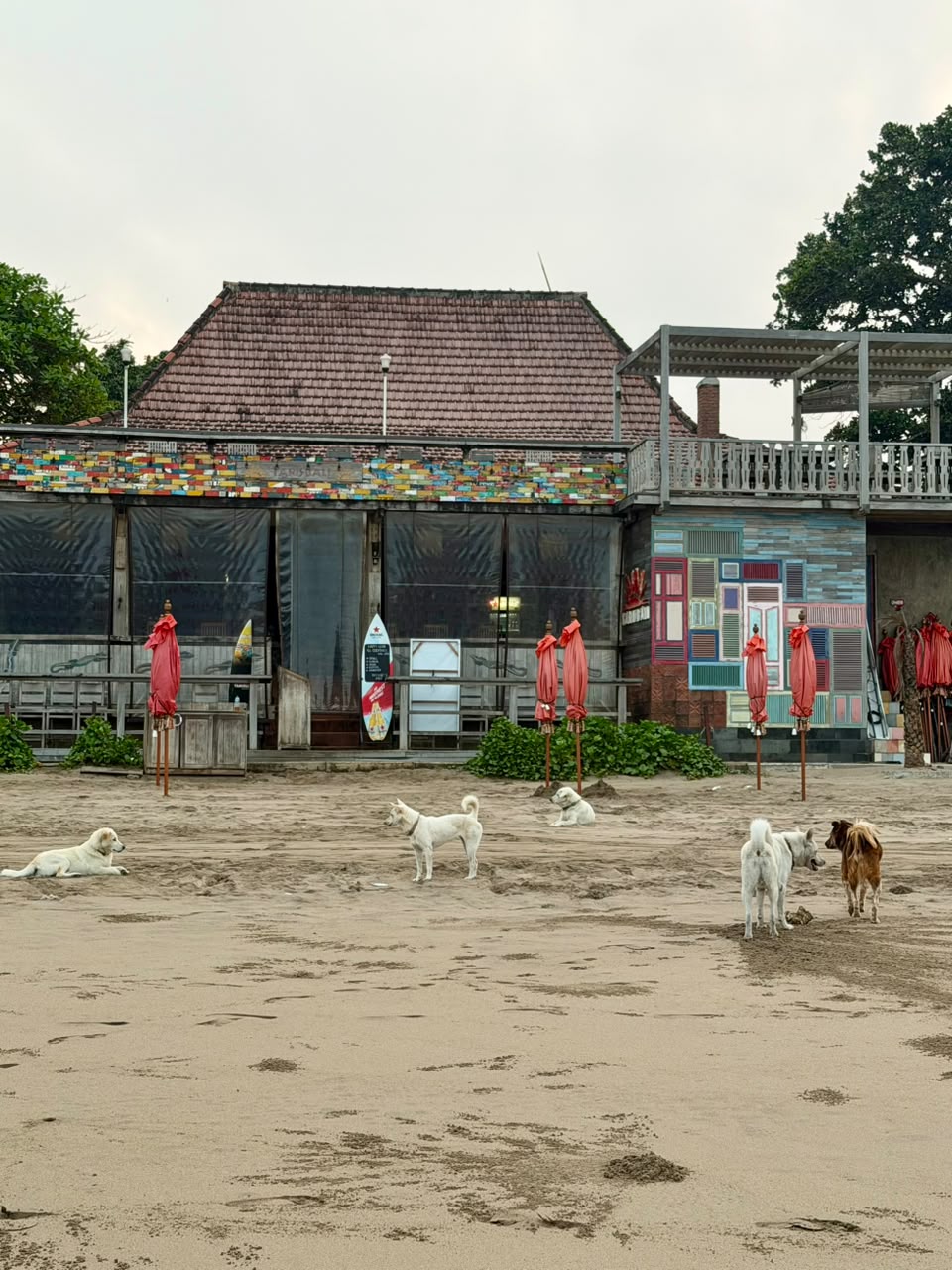
Bali, Indonesia
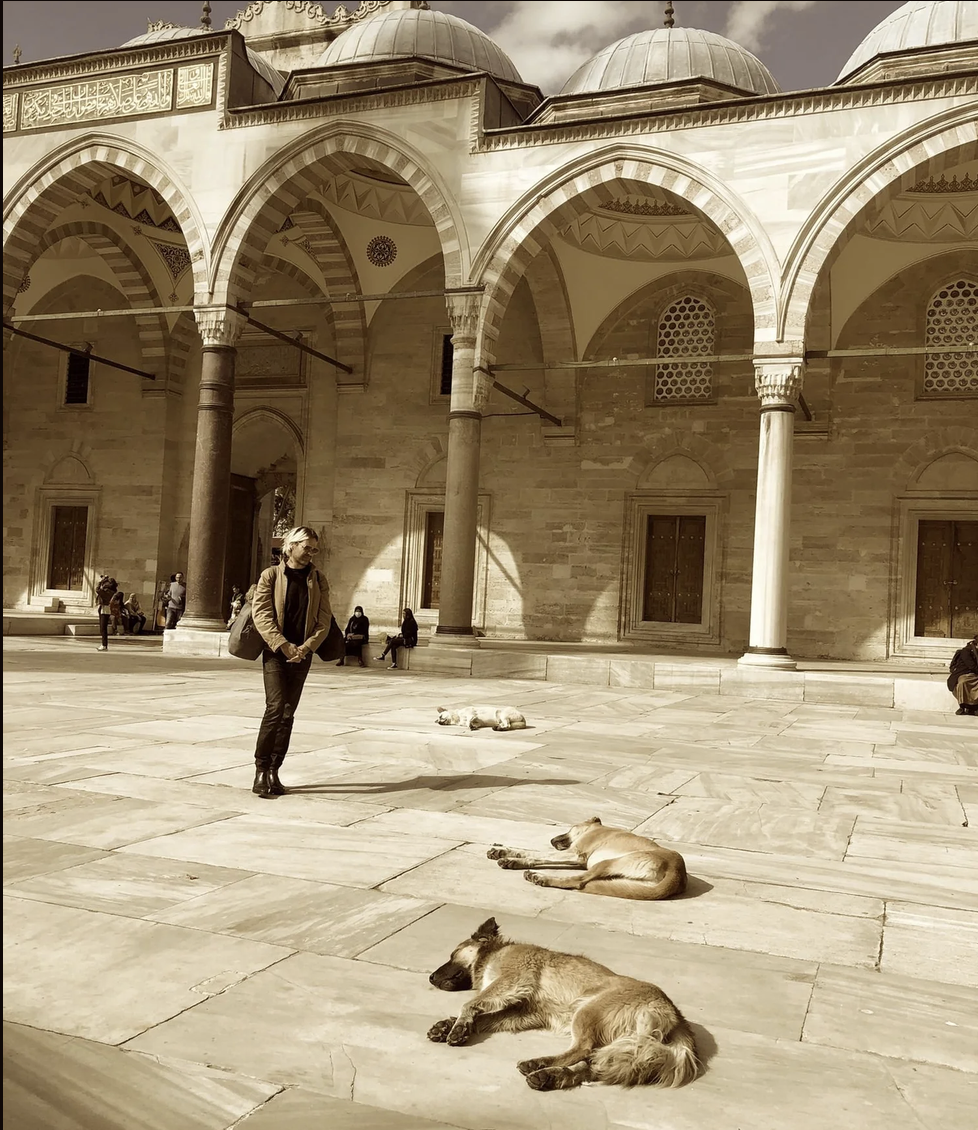
Turkey
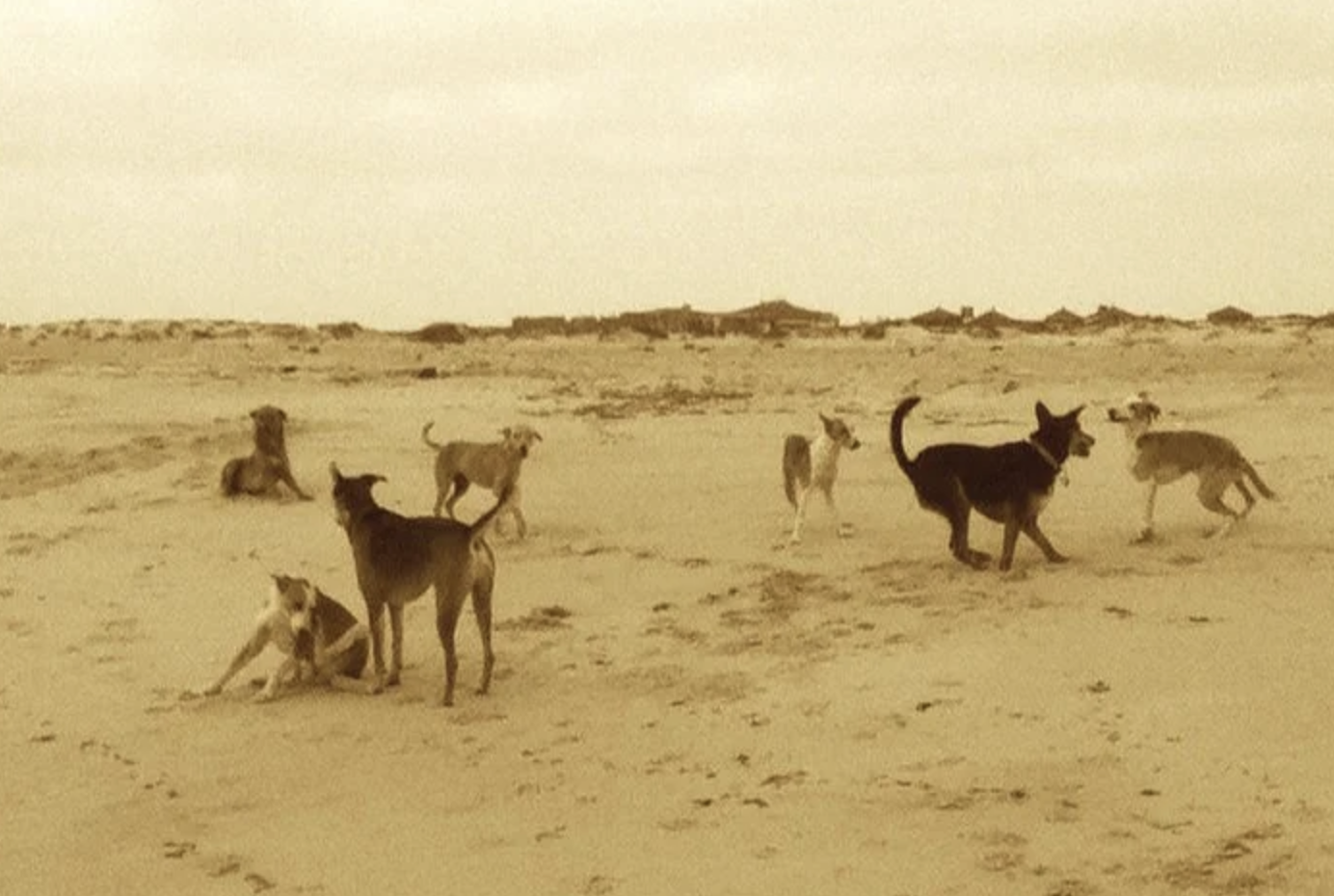
Mauritania
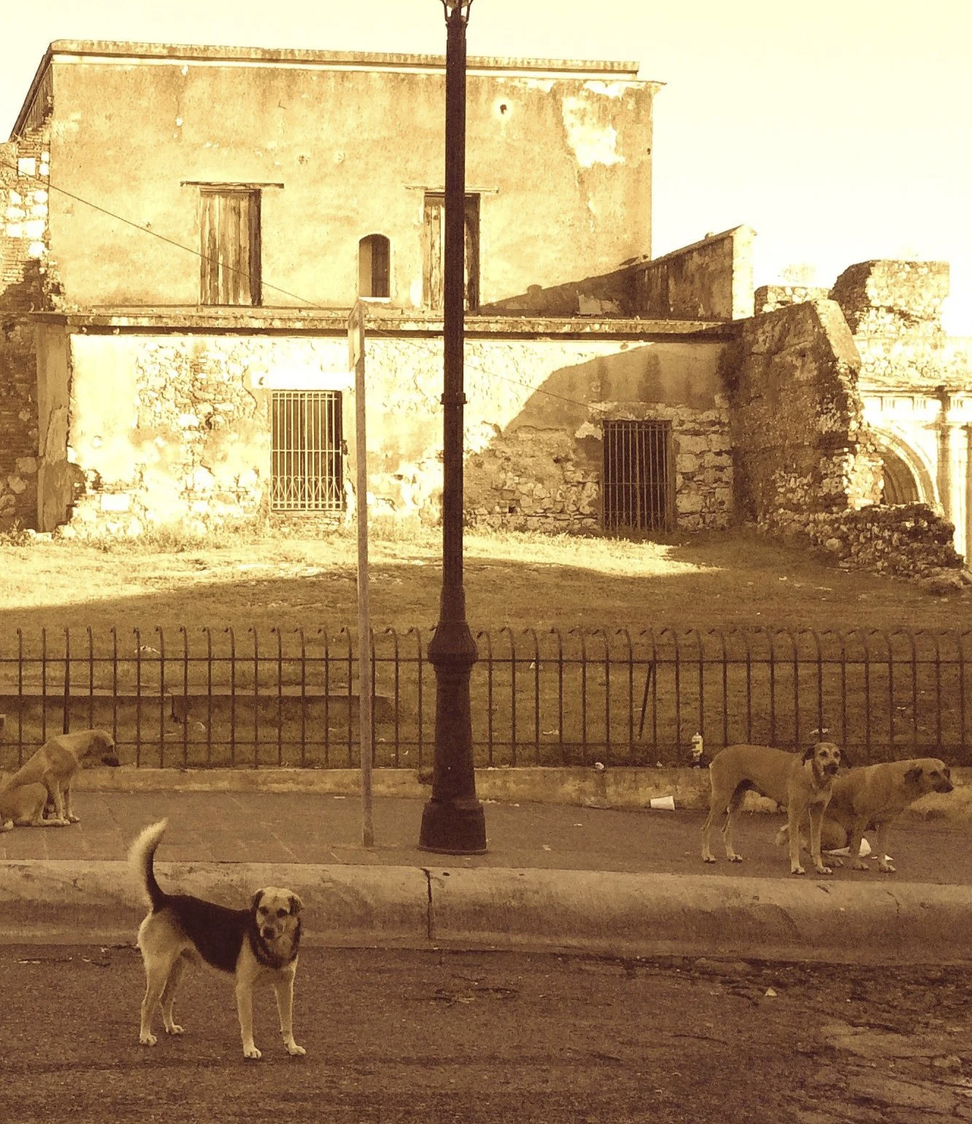
Dominican Republic
From that same observation work, the interactions below are the ones I chose to isolate and film precisely — the clearest, most repeatable demonstrations of how hierarchy actually plays out between dogs.
What I teach rests on one foundation: leadership built on control of five things — food, territory, contact, sexuality, and movement. Whichever dog holds that control is the one the others defer to. That's what the footage below sets out to show, one domain at a time. Sexuality is part of that same framework, but it's the one exception here — I don't have footage of it to show.
Food
Controlling the food itself — not just who eats first.
Two dogs, one bowl. Watch closely: the tan dog doesn't just eat from it — he picks the bowl up in his mouth and carries it off, taking control of the resource itself, not just the food in it. The black dog never tries to take it from him; he keeps his distance and waits his turn. That's what control of food looks like in practice — it isn't about who's hungrier, it's about who gets to decide what happens to the bowl.
Territory
Who holds a space — a couch, a doorway, a yard — and who waits to be let in.
The couch — an elevated spot — belongs to whoever has claimed it. One dog is settled on it; the other stays on the floor and doesn't attempt to join him.
Coming back onto the grounds through the gate — entering territory follows the same rules whether it's a house, a yard, or a stretch of path.
A dog stationed in a passageway can control who goes through — and when.
Contact
Who initiates contact, and who's allowed to stay close.
A dominant decides when to initiate contact with a subordinate — not the other way around.
Three dogs sharing the same space calmly — proximity itself is something only certain dogs are granted, depending on rank.
Physical closeness — who gets to rest against whom — follows the same hierarchy as everything else.
Moves
Who leads, who follows, who decides when the group moves.
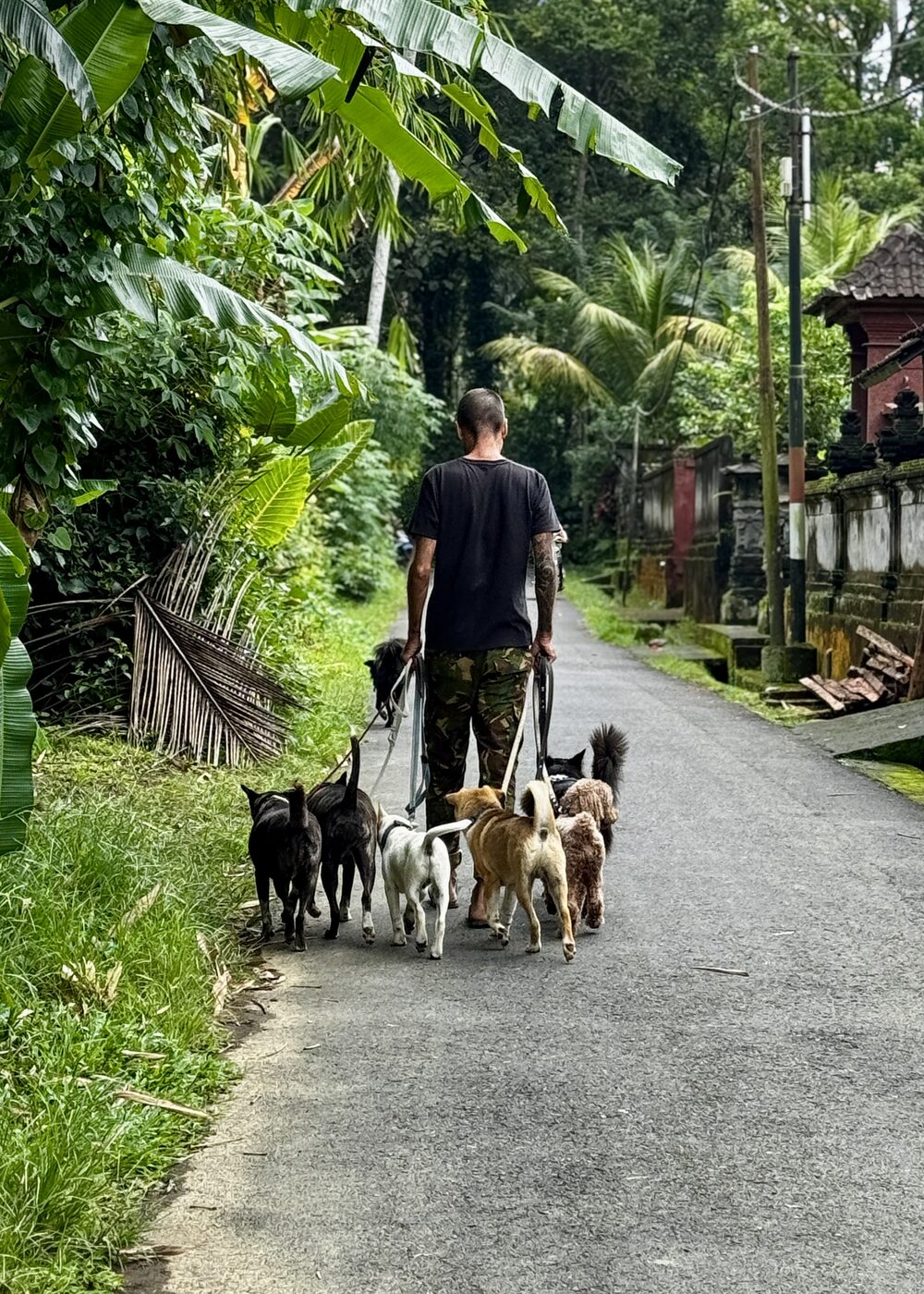
On a walk, who goes first and who stays back isn't random — movement, too, is something a dominant controls.
The dog is a social being — to grow out of that, you have to establish this hierarchical relationship, in feeding, sleeping, and contact. It's the only way to structure and soothe the animal. Monique Bourdin, veterinary doctor, graduate of the Institut Pasteur in Paris, responsible for education and consultations in behavioral disorders at the French National Veterinary School
There are debates today among behaviorists — some say the hierarchy isn't real. They're wrong. You have to get into the hierarchy: if you don't do your job as pack leader, you're going to be in trouble. When you know the dog well, there's no question about it — it isn't for the dog to decide where he goes or what he eats. He shouldn't be the leader, because if you give him room and he's a bit of a wolf around the edges, he'll take the place of pack leader, and you'll have nothing more to say. You have to accept the hierarchy. Dr. Pierre Jouventin, expert ethologist and CNRS Research Director, 1st Class — author of over 230 peer-reviewed scientific articles (A-rank journals), head of the Behavioral Ecology team at CEFE and the ETHOTAAF program (CNRS), and vice-president of the European Federation of Ecology
Dr. Pierre Jouventin wrote about my book: "You are right to go against the trend of purely positive reinforcement training, as well as the trend of denying hierarchy — one wonders how anyone can reach that conclusion when it only takes five minutes to observe it in dogs… Dog trainers lean heavily on positive reinforcement for commercial reasons, since owners prefer not to say no to their beloved dog."
One consequence of denying hierarchy: every day in the United States, 1000 people are treated in hospital emergency departments for a dog bite, according to the National Electronic Injury Surveillance System (NEISS-AIP). And more than 80% of these bites happen... at home — inflicted on family members and those closest to them.
Treat your dog like a human, and sooner or later it will remind you of its true nature.
Why do these accidents happen? For Monique Bourdin, veterinary doctor at INSERM and specialized in canine behavioral disorders, the answer is clear: "Accidents by bites are essentially linked to the failure to respect the species' way of life." She adds: "The dog is a social being; to thrive, it must live this hierarchical relationship."
Establishing a hierarchical relationship means respecting your dog's nature — respecting your dog. He's an animal who has kept all his instincts and his social way of functioning. Denying that harms him, and it's what generates most of what people call "behavioral troubles."
But establishing a hierarchical relationship is not at odds with the love and affection you feel for him — quite the opposite. The living environment you put in place structures him and puts him at ease, and within that framework you can still pet him, play with him, and give him all the affection you want — as often and for as long as you like. That framework is what a real closeness with your dog grows out of.
And the more your dog perceives you as a leader, the more attached to you he'll be — he's wired to follow a strong leader, because that leader gives him a better chance of survival.
Isn't respecting his true nature proof of love?
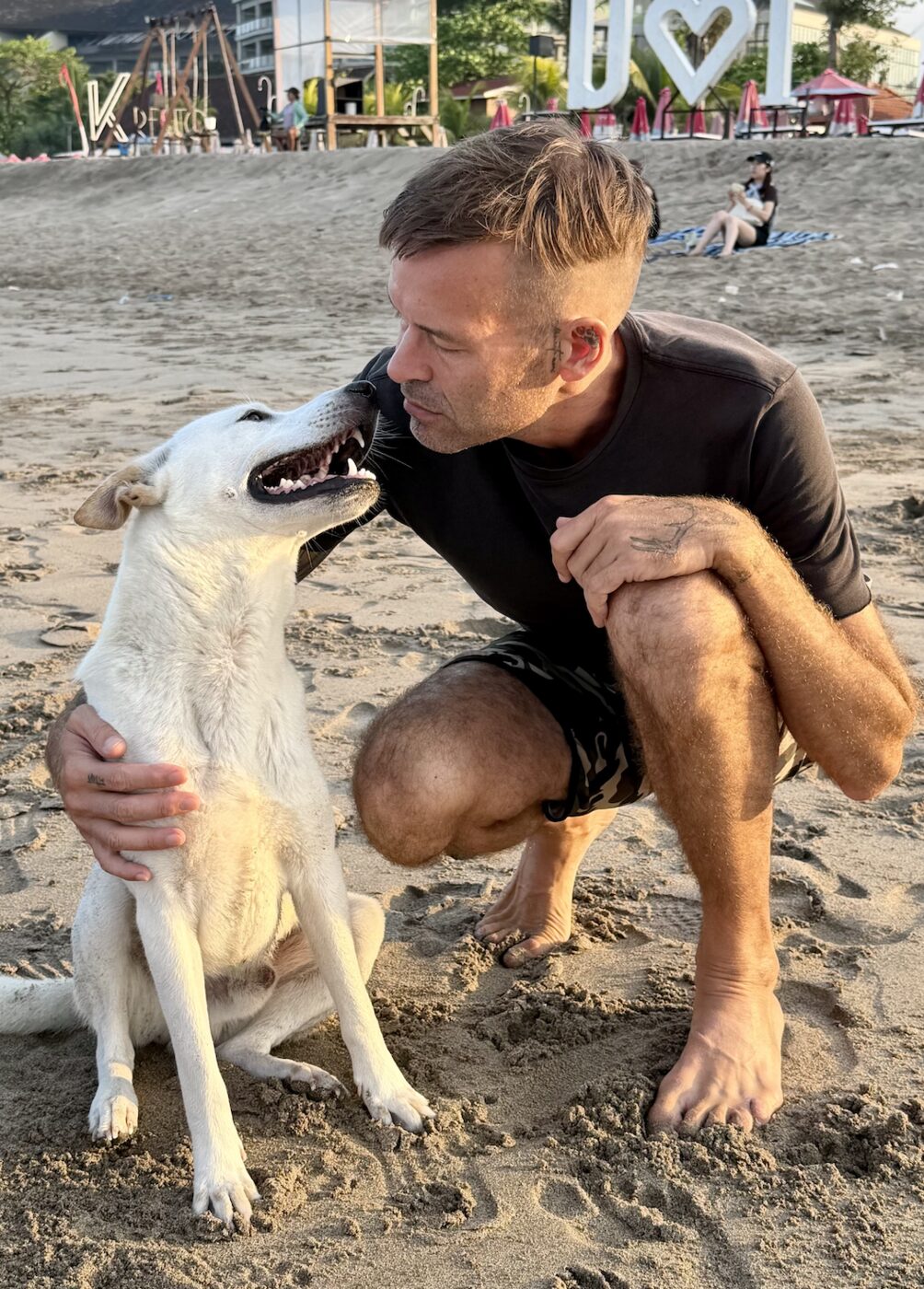
Thirty years in the field.
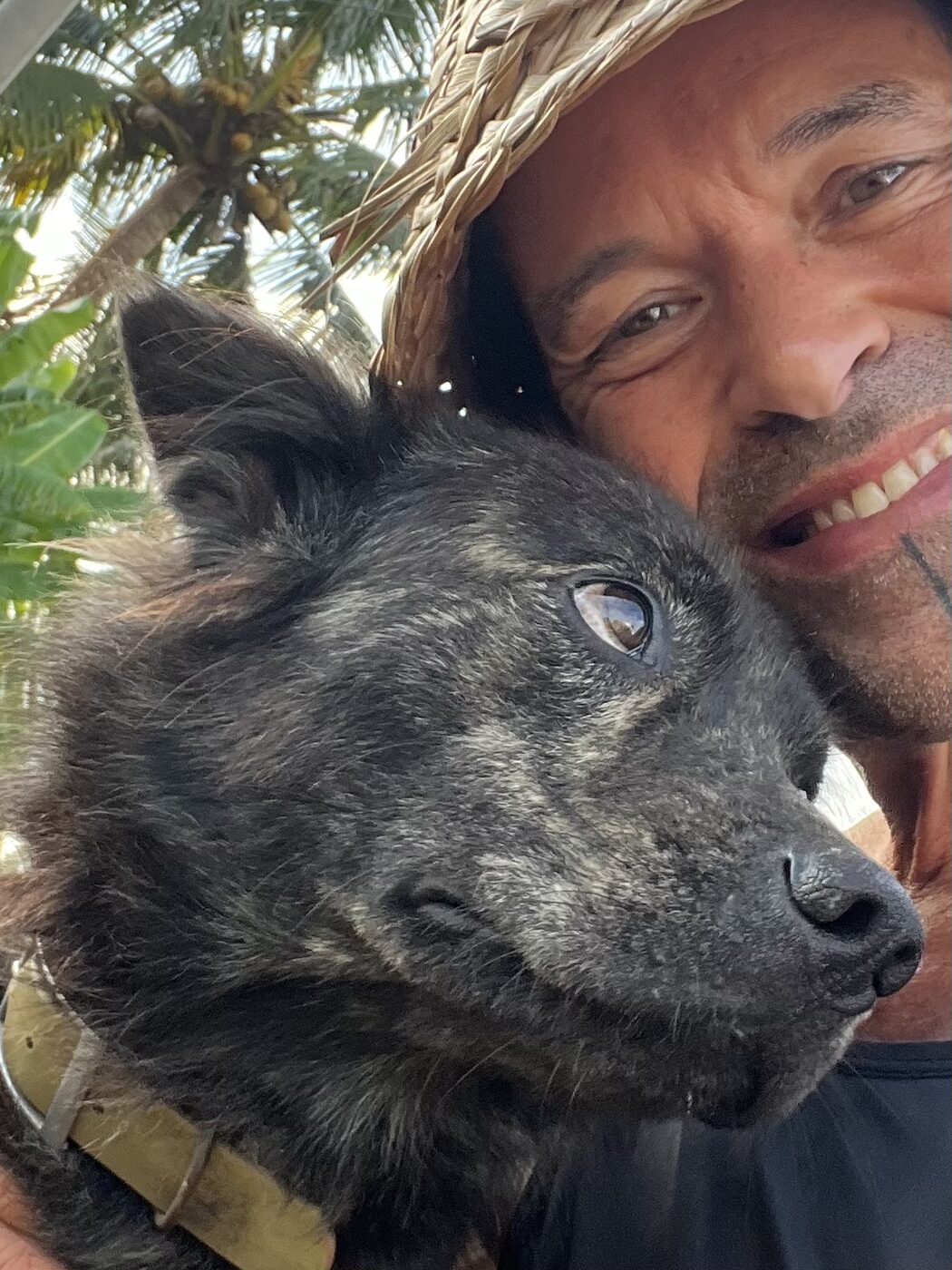
What sets Stephan apart from other dog trainers isn't a diploma — it's more than ten years spent living with and observing dog packs, every single day. His understanding of how a pack actually works isn't something he read. It's something he lived.
It's also the breadth of it. Colleagues in the field say his background is impressive — according to them, no other dog trainer has worked across as many countries or as wide a range of settings, moving between public institutions and private clients alike.
He's trained explosive-detection dogs for elite police units, run pet-therapy programs in French prisons, and worked with private clients and public institutions alike across more than a dozen countries.
Show the full background
It started with reading everything he could find on canine ethology and behavior, with no preconceived idea of what he'd find. But he didn't stop there: once he'd gathered everything available to him, he spent years testing it on the ground — living with up to 20 dogs at once, then continuing to observe wild and free-roaming packs across several countries. His own observations are what let him sort out, from everything he'd read, what actually held up.
He also studied every obedience technique available — from methods built around food rewards to far harsher training methods — and settled on the one that was, at once, the most respectful, the most effective, and the most consistent for real obedience: the one that delivers genuinely astonishing results.
For the past four years, he's continued that work in Bali, where he observes multiple semi-wild packs every day.
He also bred dogs at home for several years — not just out of passion for it, but because it let him observe a dog's behavior from birth: how the mother cares for her litter, the interactions between puppies, when hierarchical interactions between them start, how their character develops, and how they interact with adult dogs and what those adults teach them.
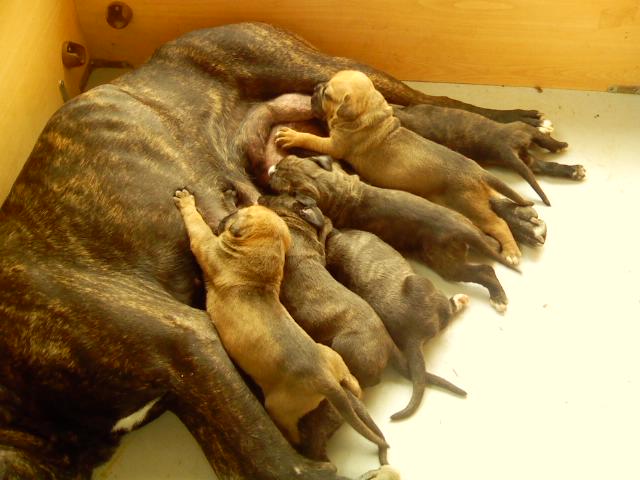
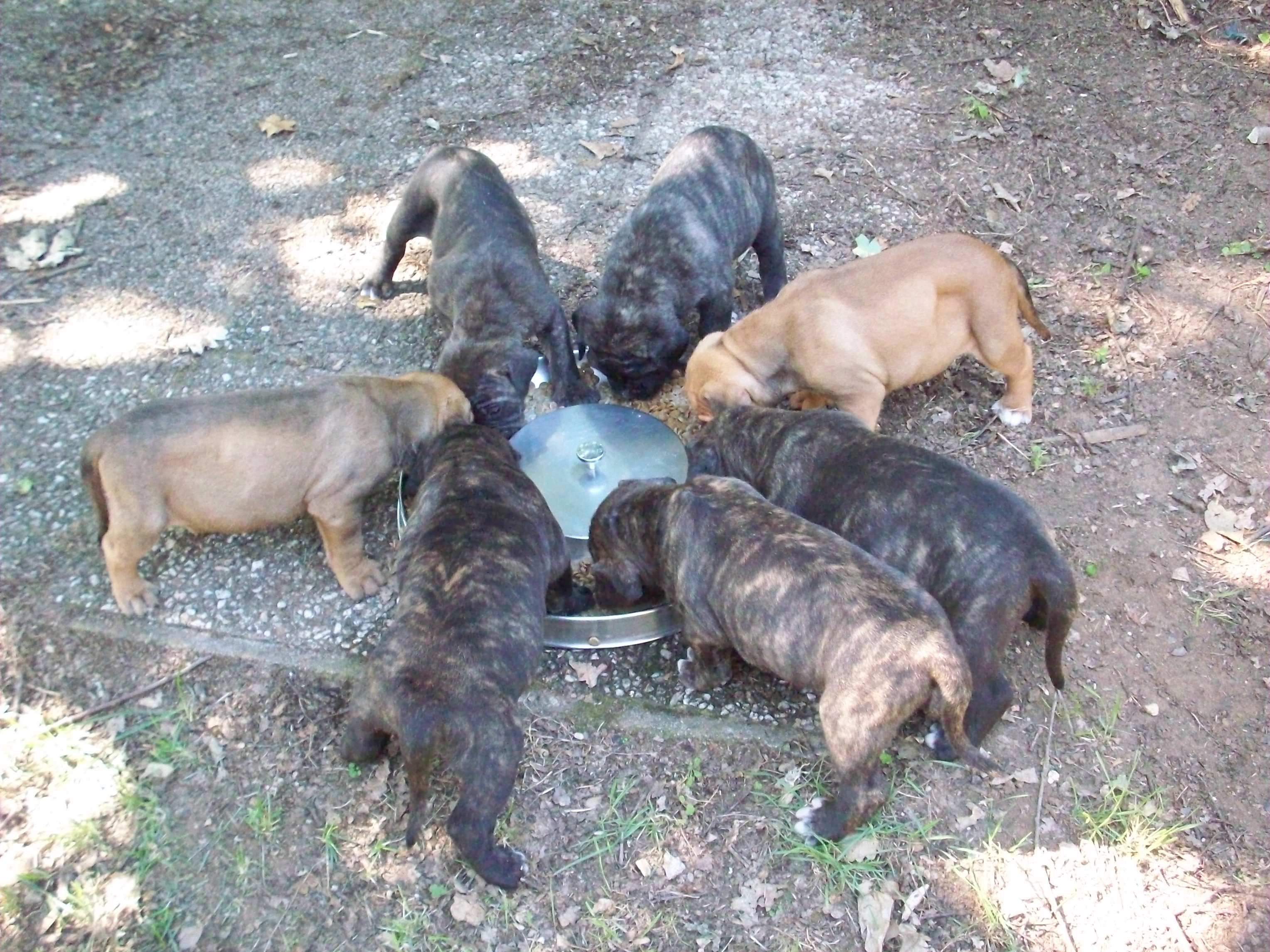
He has also trained breeders on puppy socialization, taught future trainers and dog walkers, given conferences on aggression and animal welfare, run school workshops on bite prevention, trained staff for dog rescue associations in several countries, and taught and written for France's two leading correspondence training schools. He has directed dog training films, and continues studying street-dog populations in Indonesia and India. Those observations aren't there to confirm what he already believes to be true about dogs — they're there to check whether he's missed something, or whether there are new subtleties he hasn't caught yet.
He's trained dogs and their owners across the United States, Canada, Mauritania, Lebanon, Italy, Belgium, Morocco, Luxembourg, Greece, Switzerland, Finland, India, Indonesia, the Dominican Republic, and France. He's written training manuals, produced instructional DVDs, and authored the book "Dog, tell me who you are…". He now lives in Bali, where he founded Helsinki Dog Training.
If the French Ministry of Justice trusted him to run those prison programs, if an elite police unit brought him in for explosive-detection work, if the French Ministry of Agriculture mandated him to supervise state-school training for the professional dog trainer diploma nationwide, and if national media keeps inviting him back to talk about dog behavior — it's for a reason. That kind of trust isn't extended to just anyone.
And beyond the credentials, there's the proof: footage he filmed himself, of real dogs and real packs sorting themselves out on camera. Nothing here is invented — it's what he's seen, filmed, and put in front of you, for anyone to judge for themselves.
I'm passing on everything I've learned from 30 years of study and practice. Stephan Mairesse
If knowing better means living better with it, the document proposed by Stephan Mairesse deserves to be distributed in our schools and accessible at all veterinarians. Dr. Michel Baron, veterinary surgeon — regarded as one of the world's leading canine surgeons — who has named Stephan Mairesse the best dog trainer available in France
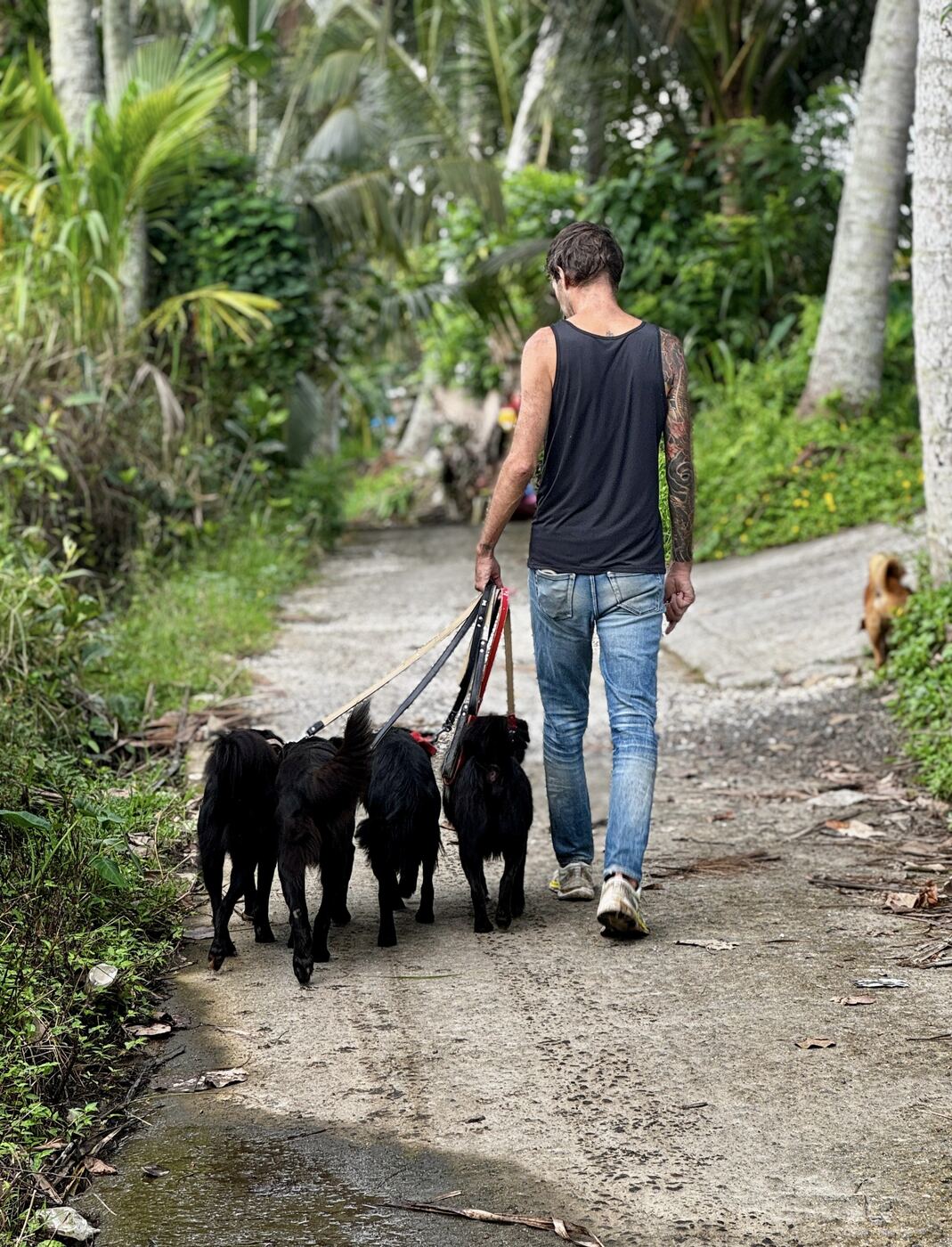
Highlights from 30 years in the field.
Interventions in the United States, Canada, Mauritania, Lebanon, Italy, Belgium, Morocco, Luxembourg, Greece, Switzerland, Finland, India, Indonesia, the Dominican Republic, and France.
Show full history
Certificate of ability n°750108 for dog training and breeding.
More at stephanmairesse.com/my-references.
Training your dog should be a big thing. And it has to be. There has to be a before, and an after.— Stephan Mairesse
When you train your dog, the professional has to be a bridge between our species and the one of dogs. A serious dog trainer has to make you enter the dog's world: how he functions, what his motivations are, how he perceives you, what his basic needs are, how to ensure a harmonious living environment for him, how to communicate well with him, what his behavior means, what it's telling you.
As long as a professional teaches you nothing beyond basic commands with treats, that isn't dog training to me. You've gained no real knowledge about your dog — knowledge that should be the ground of every interaction with him.
Almost no owner really knows "what" a dog is, so training should be, first and foremost, about discovering this wonderful animal. Only then can you truly understand him — and that's the real beginning of a deep, shared relationship. It's the real meeting with this species. And that's not a light thing at all.
— Stephan Mairesse
The companion manual, included.
Alongside the videos, you'll receive my training manual — it details the lessons taught in the videos, but also explains everything you need to know about your dog: how to choose him, how to understand him, how to communicate well with him, and how to offer him the best possible living conditions.
Full table of contents
Chapter I — Who is the dog?
Hearing · Sight · Smell · Taste · Touch
Pheromones · Body postures (Threat, Submission, The dog that wants to assert itself, Fear, Curiosity and surprise, The invitation to play)
Chapter II — Choosing a dog
At what age does the imprinting period start and end?
Chapter III — The dog's arrival in a home
The family · Children · Strangers
The puppy's arrival · The first few days (House-training, Outings, Meals, Punishments and rewards) · Welcoming an adult dog
Chapter IV — Living with a dog
Contact · Sexuality · Territory · Food · On walks
Presence · Walks · Food (Kibble, Canned pâtés, "Home-cooked rations": prepared by the owners.) · The veterinarian · Hygiene (The dog's coat, The dog's dental hygiene, The dog's eyes, The dog's nose, The ears) · Emergencies (Observation, The main emergencies)
Travelling with your dog (Formalities, The journey) · Having your dog looked after (The commitments of the various parties, The different types of care)
Chapter V — Obedience
At what age and when should you train a dog to obey? · When should you have it obey? · Why a dog obeys you
Equipment · How to give a command · Learning to stay still (Why a dog does not stay in place, Staying in the right spot, Move away gradually, Increase the difficulty, A dog's reactions during obedience training)
Sit · Down · Go to your place · Heeling (Where the dog should be positioned, Holding the lead, Putting it into practice, Heeling off the lead) · Recall
One course, The Stephan Mairesse Method.
Buy once, watch anytime — yours to keep and rewatch as many times as you need.
The Stephan Mairesse Method
Access the full HD video course to get a dog that's truly obedient in daily life, plus the companion manual — yours to keep and rewatch anytime, delivered instantly, no subscription.
Your order
Online payment isn't connected yet. Send this order and I'll follow up to complete payment and share access.
Send order via InstagramCommon questions, answered plainly.
Is online training efficient?
During COVID, I ran online training with real clients — and every one of them got the same obedience results as my in-person lessons.
How is that possible if you aren't teaching my dog directly?
It's about teaching you how to be obeyed, not teaching the dog directly — I give you the method, you apply it, and that's what gets the result.
My dog doesn't know sit, down, or heel — how can videos teach that?
Every training step is filmed and explained in detail using dogs that had never been trained before — you can start from zero, whatever your dog's level.
My dog already obeys quite well — what's the benefit?
Your dog will obey under any circumstance, anywhere — recall even around other dogs, lying still at a restaurant or a friend's house, staying in place with guests, walking to heel through a market. The goal isn't a "circus dog," but being able to enjoy your dog's presence everywhere without worrying about his behavior, and to keep him safely under control.
How old does my dog need to be? Is there an age limit?
It's possible — and advisable — to start as soon as a puppy arrives home. You're not teaching him specialized tasks like guarding or hunting, just simple, highly useful commands. There's no upper limit either: the oldest dog I trained was 13, whose owner, newly pregnant, was afraid of being pulled off her feet on the leash. That dog became perfectly obedient.
Why don't you sell separate commands?
Because obedience isn't a collection of separate tricks — it all rests on the same foundation: understanding your dog's nature and putting the right rules of life in place at home. Teach just "heel" or just "recall" without that foundation, and the results won't hold up in real life. That's why the course is sold as one complete method, not as individual commands.
Will the obedience last, or can my dog slip back?
Obedience is a living thing, not a one-time fix — a lapse in vigilance and your dog will test it. The good news: it comes back just as quickly. Spot the mistake, correct it, and you'll regain your previous level, often a higher one.
Why don't you appear much on social media?
Before working in the US, I had no Facebook, Instagram, or any content at all. I set up a very simple Instagram account once I was working in New York City, but I've never really kept up with it or tried to build a following. I dedicate my time to the field, working with dogs, not to social media.
Notes on ethology and behavior, straight from the source.
A selection of articles written over the years, going deeper into the ideas behind the method.
Is a dog's temperament determined by its breed?
Why breed explains far less about a dog's character than people assume — and what actually does, according to Patrick Pageat and 30 years of practice.
Bali, the island of authentic dogs
Why do Bali's free-roaming dogs — living right alongside families — flinch from every hand that reaches for them? A trail that leads back to the earliest days of domestication, and what these "prototype" dogs reveal about the breed's astonishing adaptability.
The development of the puppy: impregnation and socialization
The three-week-to-three-month window that shapes a dog's temperament for life, and why it conditions everything that follows.
Letter to dogs
An open letter to the species closest to us — first domesticated, still helping us hunt, guard, detect, and rescue — asking what we've done to deserve it.
Show 15 more articles
Rules of life and obedience are basic and fundamental needs
Without a job to do, a companion dog still needs its brain stimulated — or it develops the compulsive behaviors seen in under-stimulated zoo animals.
Dogs and the hierarchy
What Monique Bourdin, one of France's leading behavioral veterinarians, and Patrick Pageat, a European leader in the field, say about hierarchy and canine wellbeing.
Aggression in dogs
A deep, practical breakdown of why dogs bite, who's most at risk, and how dominance, obedience, and breeding conditions prevent it.
The dog and the human attachment
How a puppy's attachment shifts from its mother to a family member — and why a dog is ultimately "faithful" to whoever holds the dominant position.
Dog training and preconceived ideas
Six common assumptions about dog ownership — from "never punish with your hand" to "self-regulated feeding" — examined and corrected.
Choosing a breeder
What to check before bringing a puppy home: hereditary screening, and why the breeder's socialization work matters as much as the pedigree.
Pierre Jouventin: the dog and the hierarchy
A CNRS ethologist on why refusing the pack-leader role leaves a dog — a wolf "around the edges" — to take it instead.
The establishment of a hierarchy between individuals of different packs
Four years observing Bali's free-roaming packs, on top of dog packs studied across a dozen countries, reveal something rarely documented: a hierarchy also forms between individuals from different packs when they meet regularly.
1000 times a day in the United States, a dog sends its owner to the emergency room
NEISS-AIP hospital data on dog bites, and why more than 80% of them happen at home — inflicted on family members and those closest to them.
When the dog no longer follows its owner
Boarded dogs who refused to go home with their own owners — a firsthand illustration of why dogs are wired to follow whoever actually leads, not just whoever loves them.
Cesar Millan and energy
Why Cesar Millan's "energy" — Intention × Emotion — isn't what makes a leader: it's consistent, predictable rules, held regardless of mood, that a dog actually respects.
No consequence, no obedience — what about positive reinforcement?
Thirty years of using positive reinforcement, and why it alone still isn't enough: without some discomfort attached to disobedience, a dog has no real reason to obey.
Raising sociable, balanced puppies — Part 1
What happens at the breeder in the first three months, and why it matters more than anything an owner does afterward.
Raising sociable, balanced puppies — Part 2
The socialization window in detail: sensory imprinting, intra- and inter-species learning, and how to work through it properly.
A puppy's first nights at home
Why the first week matters, why a brief spell sleeping in the bedroom is fine, and what not to do when a puppy cries at night.
More writing at stephanmairesse.com/blog.
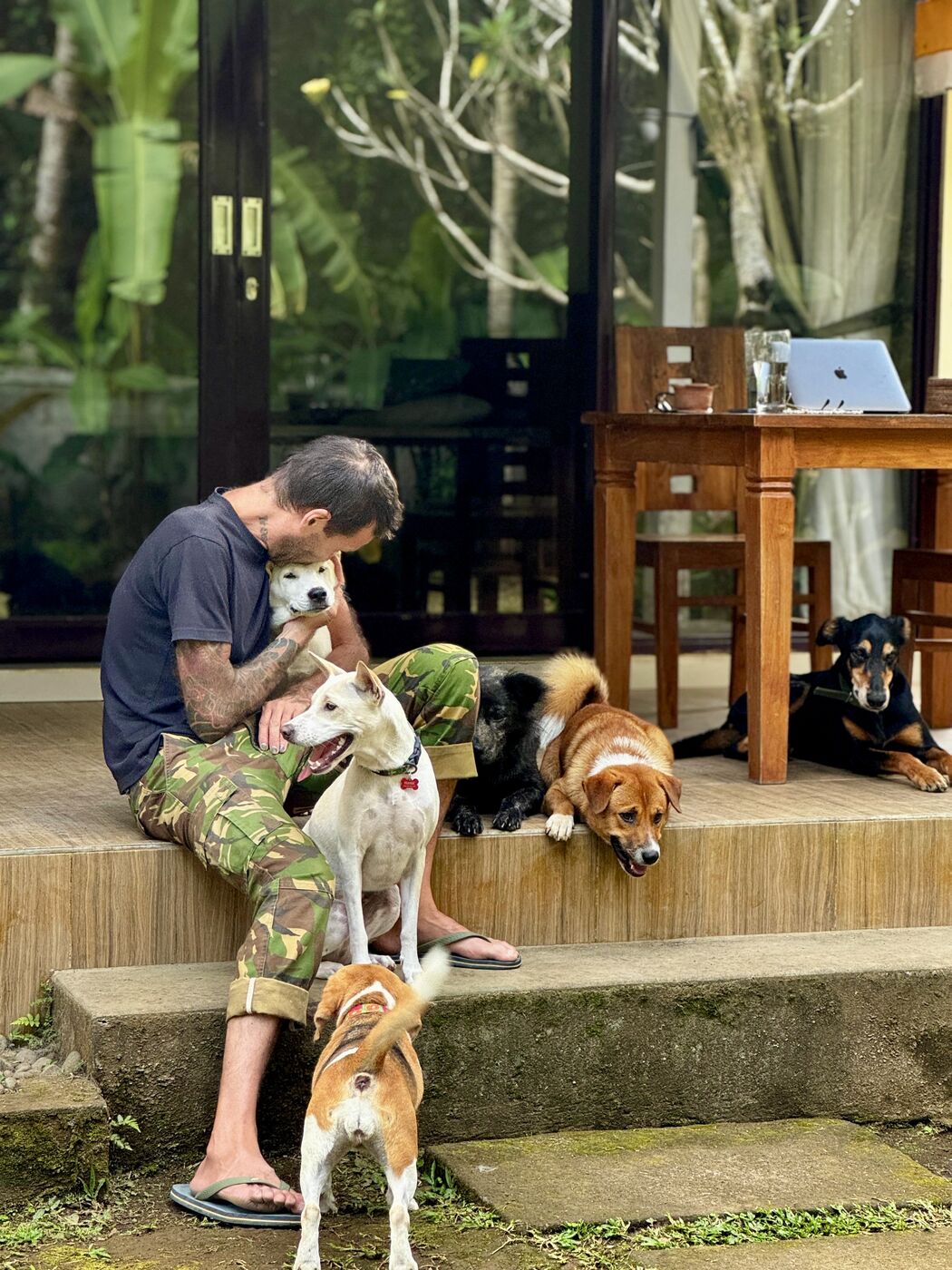
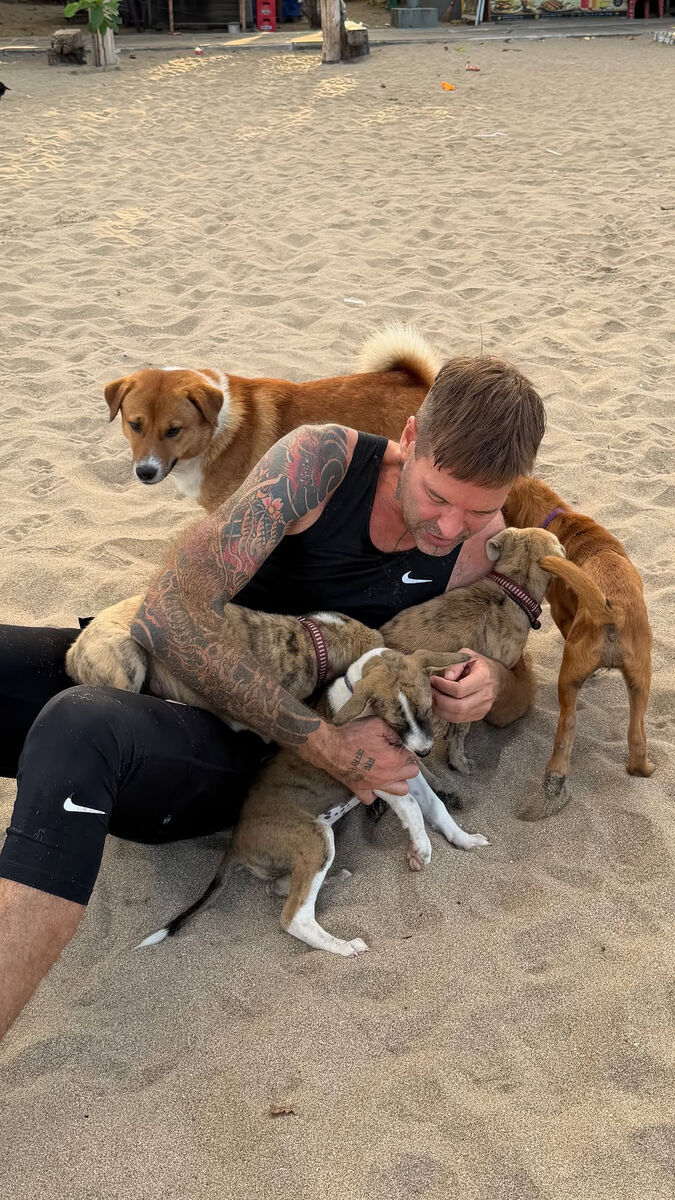
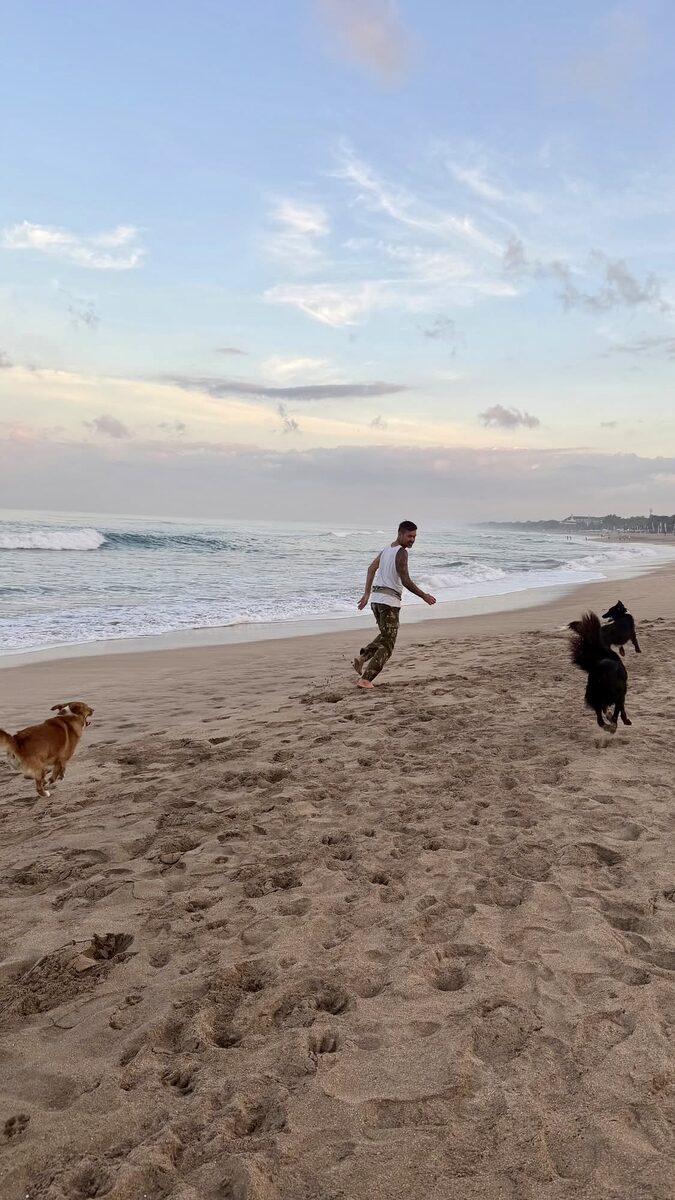
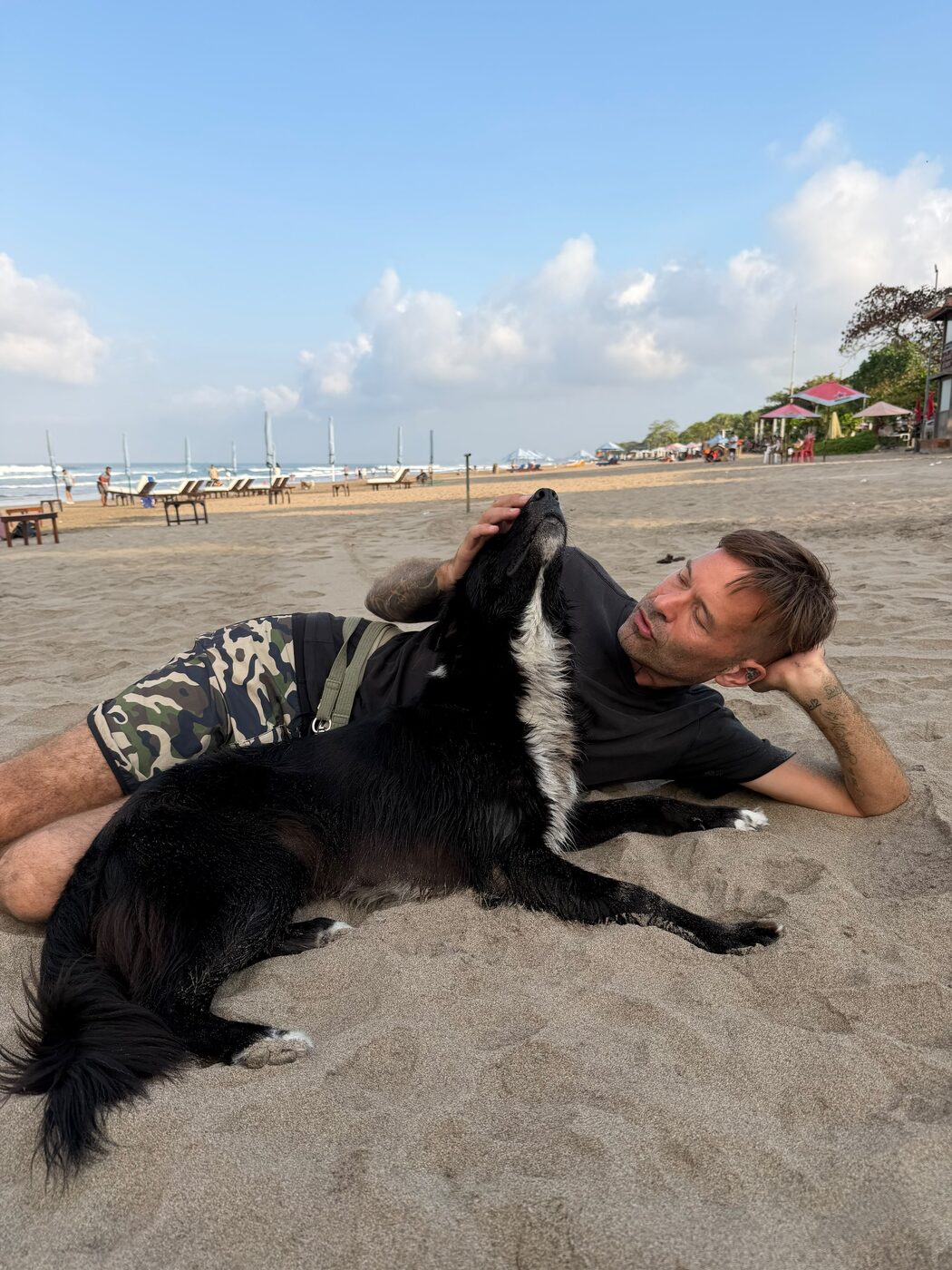
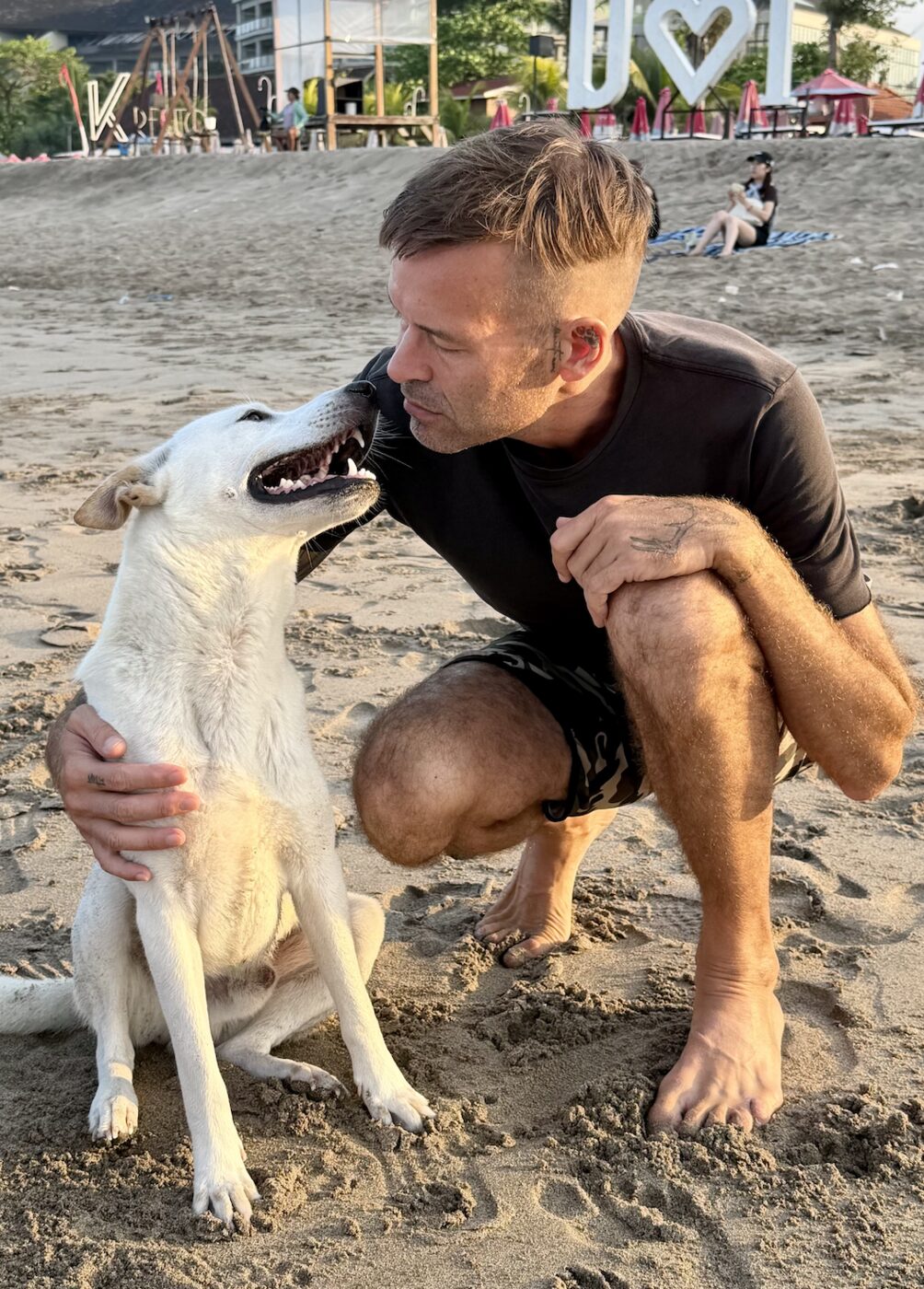
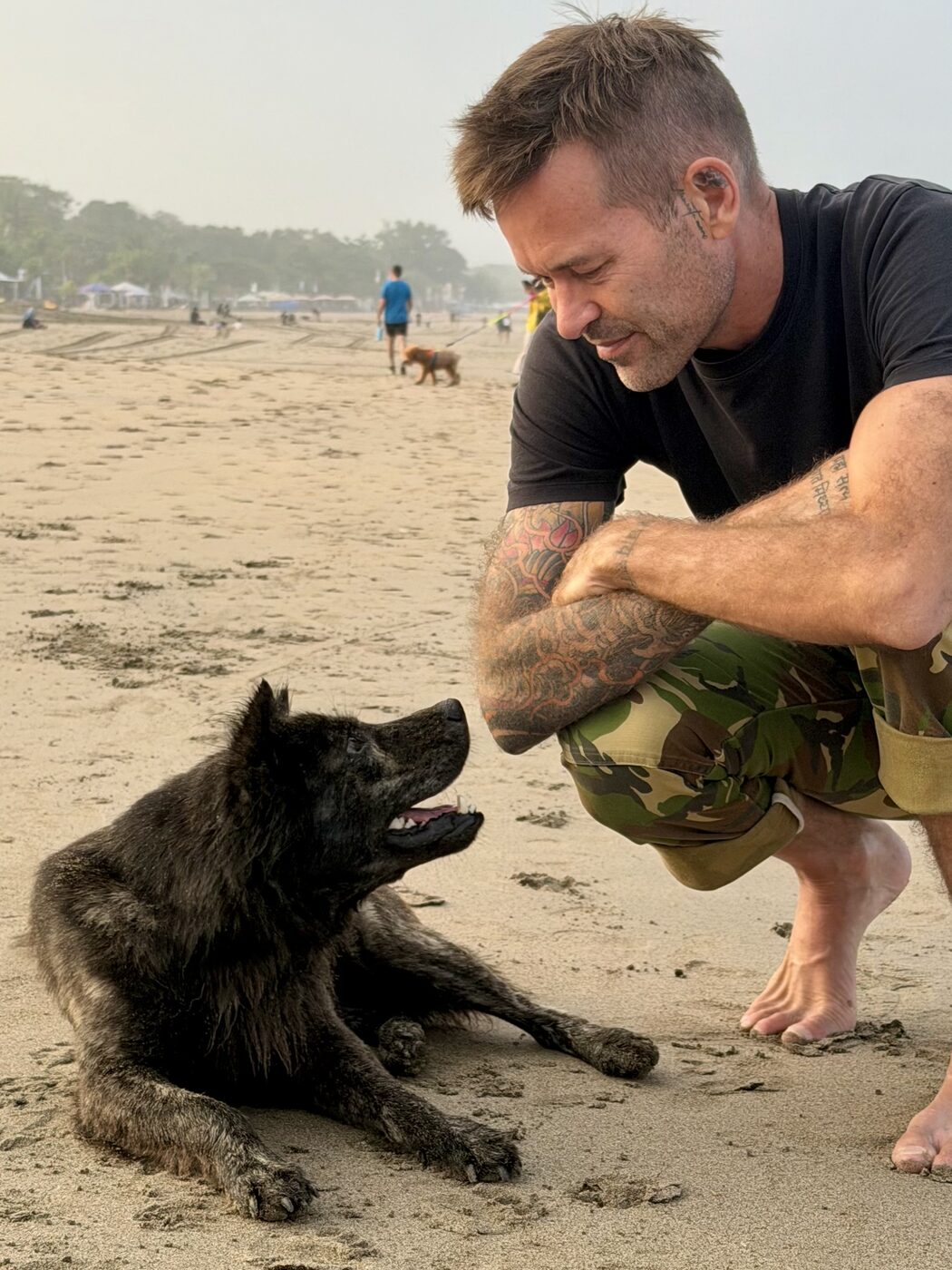
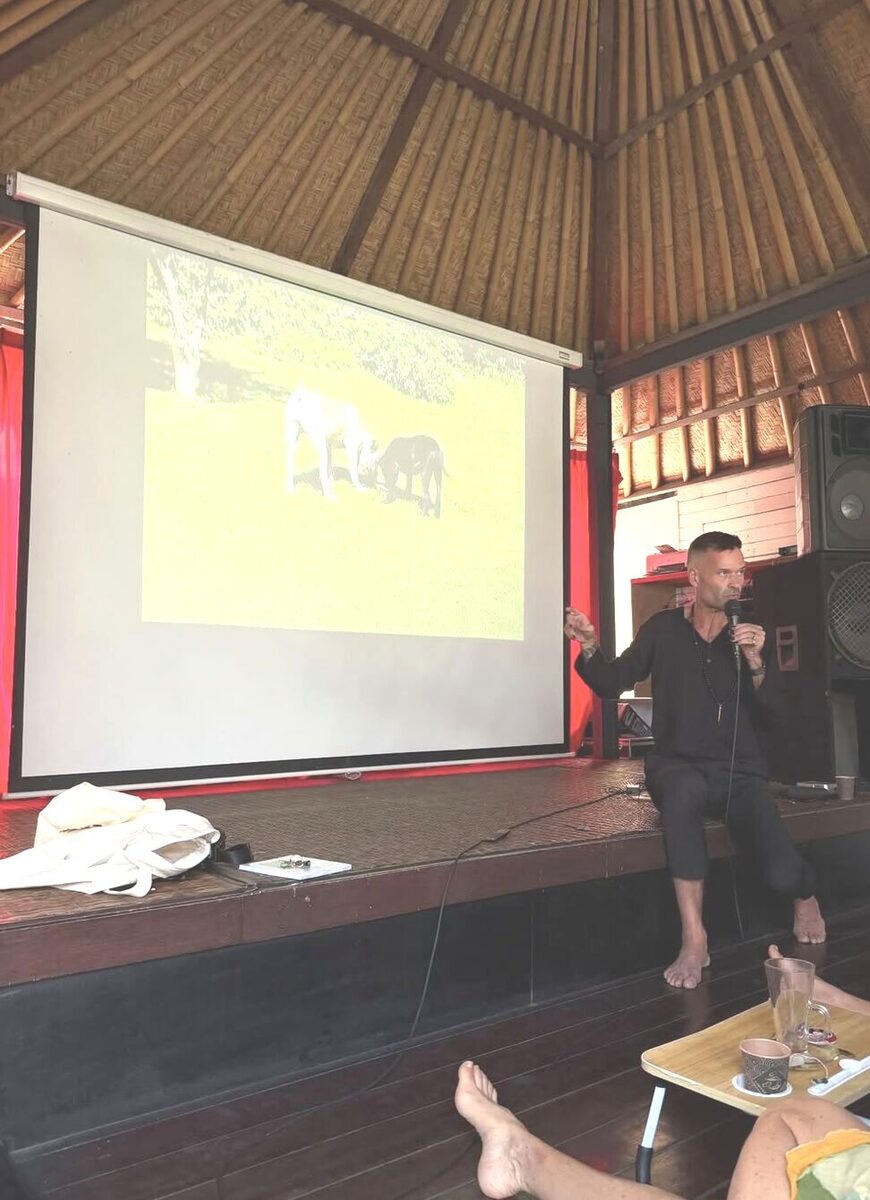
With the dogs, every day.





Show all 26 photos